

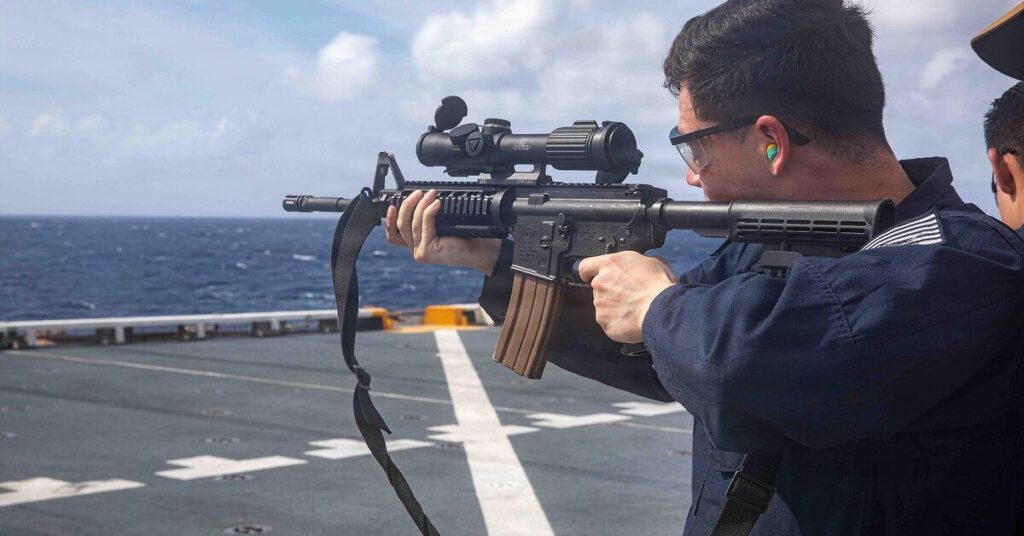
The image of a sailor squeezing off controlled pairs with an M4 on the open flight deck of USS Fort Lauderdale isn’t just a cool photo op—it’s a vivid reminder that the Second Amendment isn’t confined to static ranges or private property. When the Navy turns an amphibious transport dock into a live-fire platform in the middle of the Caribbean, it underscores how the right to keep and bear arms is baked into the daily rhythm of national defense. The absence of a traditional backstop or overhead cover forces shooters to master fundamentals under real-world variables—wind, salt spray, rolling deck motion—conditions that mirror the unpredictable environments law-abiding citizens might one day face when defending hearth and home.
For the 2A community, this kind of training also quietly rebuts the tired narrative that “military-grade” firearms are too dangerous for civilian hands. The same carbine platform millions of Americans train with on weekends is being drilled by sailors whose mission set includes everything from humanitarian assistance to high-end maritime combat. That overlap in equipment and skill sets reinforces why restrictions aimed at “weapons of war” are both legally and practically incoherent: the tools that keep the fleet safe are the same ones that keep neighborhoods safe when seconds count and police are minutes away.
Beyond symbolism, the photo carries a practical implication for preparedness culture. If the Navy can certify marksmanship on a pitching steel deck with nothing but the horizon as a backstop, civilian shooters should feel emboldened to push past sterile square-range routines and incorporate movement, unconventional positions, and environmental stressors into their own regimens. In an era when some states keep trying to shrink the space between “allowed” and “prohibited,” scenes like this serve as a rolling referendum that the right to bear arms remains operational—even when the range has no roof and the backstop is several thousand miles of open ocean.


