

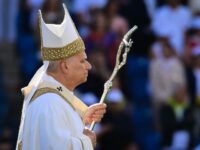
The elevation of Pope Leo signals more than a change in the Vatican’s leadership—it marks a potential realignment of moral authority that could ripple into the American gun culture debate. Historically, Catholic teaching on self-defense has rested on the principle that the right to life inherently includes the right to protect it, a stance that aligns closely with the natural-rights foundation of the Second Amendment. If this new pontiff leans into that tradition rather than the more restrictive interpretations favored by some European bishops, he could quietly re-legitimize armed self-defense for millions of Catholic voters who already own firearms and see them as tools of responsibility rather than symbols of aggression.
For the 2A community, the timing is significant. As progressive jurisdictions push magazine bans, red-flag laws, and “assault weapon” restrictions, any softening of institutional religious opposition to private arms could blunt the moral framing that gun-control advocates often deploy. A pope willing to speak plainly about subsidiarity—the idea that legitimate authority resides first with individuals and families—would echo the same logic gun owners use when they argue that security begins at home, not with distant bureaucracies. Even symbolic gestures, such as acknowledging the legitimacy of armed security at churches after recent attacks, would send a message that protecting the flock is compatible with faith rather than a betrayal of it.
The longer-term implication is cultural rather than legislative. If Pope Leo’s rhetoric begins to decouple Catholicism from the reflexive anti-gun posture common in some academic and media circles, it could accelerate the ongoing shift of observant Catholics toward the pro-2A coalition already visible in polling. That shift matters in swing states where Catholic voters remain a decisive bloc; it also matters inside the Church itself, where younger priests and laity increasingly view the right to bear arms as consistent with both Thomistic ethics and American constitutionalism. In short, the next Reformation may not be about doctrine alone—it may also redraw the battle lines over who gets to decide how free people defend their families and their faith.


