

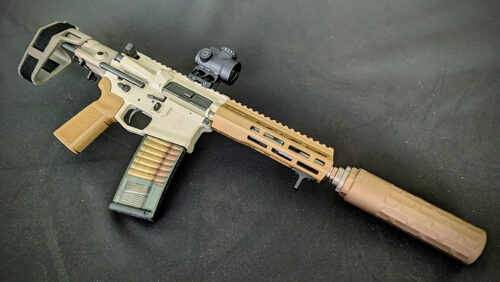
Ohio’s failure to finish the job on suppressor reform has created a legal minefield that no other state has to navigate. While a federal court ruling now lets residents in 27 states buy and transfer suppressors without the old NFA paperwork, Ohio gun owners are still tethered to a statute that treats the devices as “dangerous ordnance” even when federal law no longer requires registration. The result is a patchwork trap: a law-abiding Buckeye who buys a suppressor under the new federal framework could still face felony charges under lingering state language that SB 214 was supposed to clean up. Lawmakers left the bill in committee, apparently more worried about optics than about the criminal exposure they handed their own constituents.
The deeper problem is that Ohio’s inaction turns a pro-2A victory into a cautionary tale about half-measures. Suppressors are safety equipment—pure and simple—yet the state’s outdated code keeps them lumped in with actual weapons of violence. That mismatch invites overzealous local prosecutors and chills lawful ownership at the exact moment the rest of the country is moving toward normalization. Gun owners who cross state lines for training or competition now have to weigh whether their home-state statute will follow them back, a calculation that never should have existed in the first place.
For the broader Second Amendment community, Ohio’s unfinished reform is a reminder that federal progress is only as strong as the states that choose to ratify it. Until the General Assembly finishes what it started, Ohio remains an outlier that punishes compliance instead of rewarding it, and every month of delay adds another data point for activists arguing that “constitutional carry” rhetoric sometimes outruns constitutional carry reality.


