

The New York Times has once again reached for the most dramatic historical analogy it could find, likening America’s gun culture to the decadence of a collapsing Rome. The comparison is as lazy as it is revealing: Rome fell because its institutions rotted from within, its currency debased, its legions stretched thin, and its citizens disarmed and dependent on a distant, unaccountable state. The American gun owner, by contrast, represents the opposite impulse—citizens who refuse to outsource their security to the same institutions that have repeatedly failed them in moments of crisis. Where Rome’s decline was marked by the loss of civic virtue and self-reliance, the persistence of the Second Amendment is a stubborn reminder that the American experiment still prizes individual responsibility over centralized control.
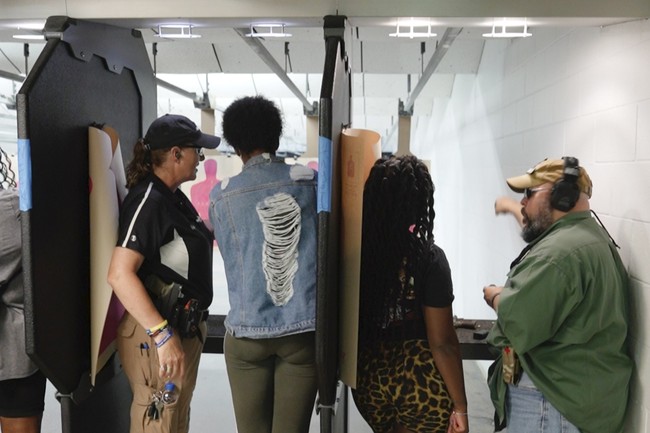
What the reporter misses, or perhaps deliberately ignores, is that the firearms community has never been more disciplined or purpose-driven than it is today. Modern gun culture is defined by rigorous training standards, legal compliance, and a growing emphasis on responsible ownership that would have been unrecognizable to the caricature of “excess” the Times is peddling. Meanwhile, the real parallels to late-stage Rome—ballooning national debt, open borders, politicized law enforcement, and a ruling class insulated from the consequences of its policies—are the very conditions that make an armed citizenry not a symptom of decay but a safeguard against it. The Second Amendment exists precisely because history shows that when governments weaken, the people who can protect themselves are the ones who survive.
For the 2A community, this latest media broadside is less an argument than a tell: it signals that the cultural battle over firearms is shifting from policy minutiae to existential framing. The goal is no longer to debate background checks or magazine capacity; it is to paint gun ownership itself as a civilizational pathology. That framing will not disarm a single criminal, but it will further alienate the millions of lawful owners who already view legacy media as an unreliable narrator of their lived experience. The response from the firearms community should be the same one that has sustained the right to keep and bear arms through every previous wave of hysteria: continued legal preparedness, relentless transparency about defensive gun uses, and an unapologetic defense of the principle that free people do not beg permission to remain free.


