

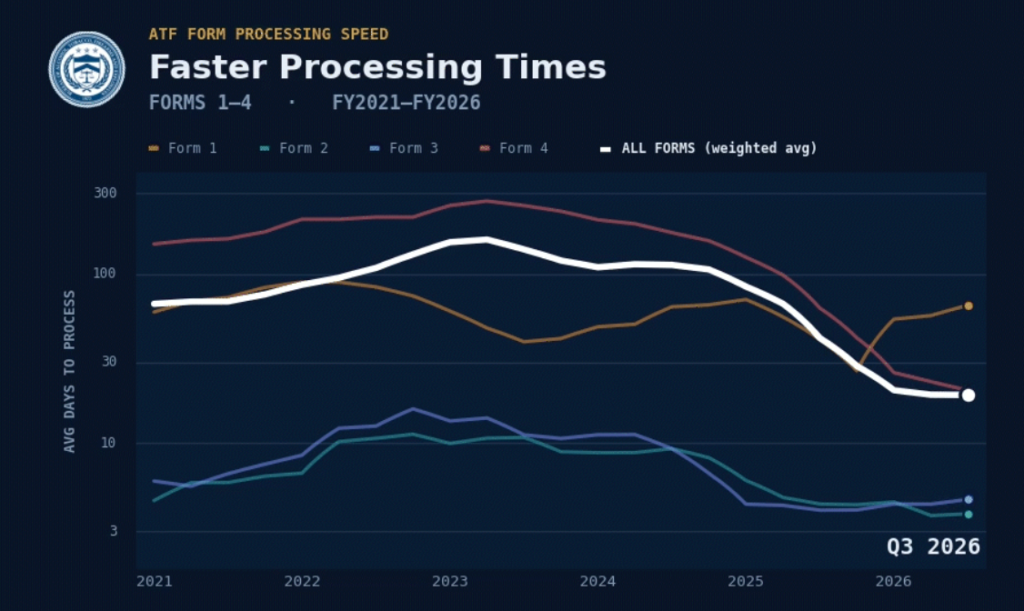
The surge in NFA applications isn’t just a paperwork spike—it’s a referendum on how the ATF’s own modernization efforts are reshaping the suppressor and SBR markets. With wait times collapsing to roughly eighteen days, the agency has effectively removed the single biggest deterrent that once kept casual buyers on the sidelines. What we’re witnessing is the quiet normalization of items that, for decades, carried the psychological weight of “months of waiting and a $200 tax just to own a can.” Shorter timelines mean more first-time applicants, more impulse buys at the gun counter, and a broader demographic that now sees NFA gear as practical rather than exotic.
For the 2A community, the numbers carry a deeper strategic message. Every new suppressor owner is another stakeholder who has skin in the game when future regulations are debated. The NSSF data also hints at a feedback loop: as volume rises, the ATF’s digital workflow keeps improving, which in turn invites still more applicants. That virtuous cycle undercuts the old argument that NFA items are too cumbersome for mainstream use and simultaneously builds a larger constituency ready to push back against any attempt to roll back these gains. In short, the agency’s efficiency upgrade may have done more to mainstream suppressors than any marketing campaign the industry could have mounted on its own.


