

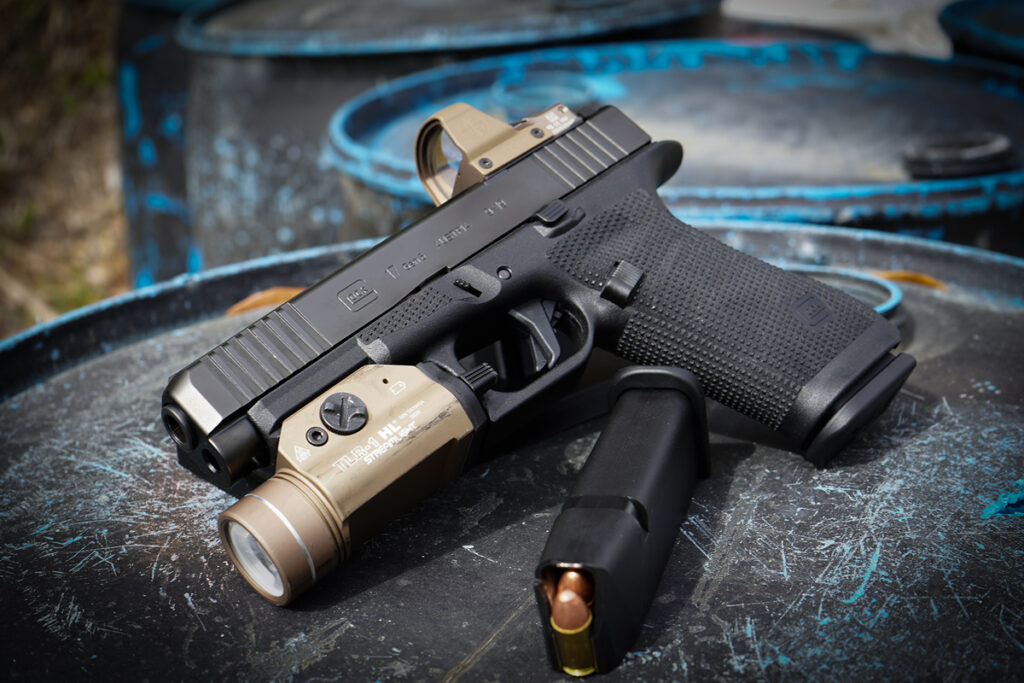
Maryland’s latest attempt to outlaw Glock-pattern pistols isn’t just another gun-control bill—it’s a direct shot at the most popular, most proven defensive handgun platform in America. By banning any semi-automatic handgun that accepts a magazine outside the grip or features a “similar design” to a Glock, Annapolis is effectively erasing the modern standard for concealed-carry and home-defense pistols. The NRA, FPC, and SAF rightly recognize this as a de-facto prohibition on an entire class of arms “in common use,” a move that collides head-on with the Supreme Court’s Bruen framework and the plain text of the Second Amendment.
What makes the lawsuit especially potent is how cleanly it maps onto post-Bruen precedent: millions of Americans already rely on Glock-style pistols for lawful self-defense, so the state must now prove these firearms are somehow analogous to weapons the Founding generation would have banned—an evidentiary bar Maryland has never cleared. The coordinated legal strategy also signals a maturing 2A ecosystem; three of the movement’s heaviest hitters pooling resources means faster discovery, stronger expert testimony, and a unified message that “feature bans” on handguns are legally and politically toxic.
For everyday carriers and first-time buyers, the stakes are immediate: if this law survives even temporarily, Maryland residents lose access to the single most recommended platform for new shooters and women choosing their first defensive handgun. The case is therefore both a litigation test and a cultural referendum—win it, and the 2A community cements the principle that government cannot redefine “common use” out of existence; lose it, and the door opens for copy-cat bans in every blue state.


