

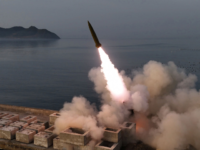
North Korea’s latest missile barrage, fired just days after President Trump’s renewed diplomatic overtures, is a textbook reminder that authoritarian regimes respect strength, not summit selfies. While the mainstream press frames the launches as a “response” to U.S. policy, the timing suggests Pyongyang is testing whether the next administration will revert to the same feckless appeasement that produced the 2018–19 “love letters” and empty freeze-for-freeze deals. The regime’s arsenal—now featuring solid-fuel ICBMs and hypersonic glide vehicles—has grown precisely because past U.S. administrations treated arms control as a press-release exercise rather than a deterrence mission.
For the 2A community, the lesson is straightforward: when rogue states flaunt nuclear-tipped missiles, the only reliable backstop is a well-armed citizenry and a military that isn’t hamstrung by magazine bans or “assault weapon” hysteria. Every new North Korean test underscores why semi-automatic rifles, large-capacity magazines, and robust domestic arms manufacturing aren’t cultural luxuries—they’re the tangible expression of a people who refuse to outsource their security to paper treaties or foreign goodwill. If Kim Jong-un can sprint from zero to multiple ICBM types in under a decade, imagine how quickly an American populace stripped of modern arms could find itself at the mercy of similar authoritarian math.
The deeper implication is strategic: peace-through-strength isn’t a slogan; it’s the reason the U.S. mainland hasn’t faced a conventional invasion since 1812. North Korea’s provocations should stiffen, not soften, domestic resistance to incremental disarmament schemes dressed up as “common-sense” legislation. The 2A isn’t just about hunting or sport; it’s the constitutional recognition that free people must retain the means to deter tyrants—foreign and domestic—when summits fail and missiles fly.


