

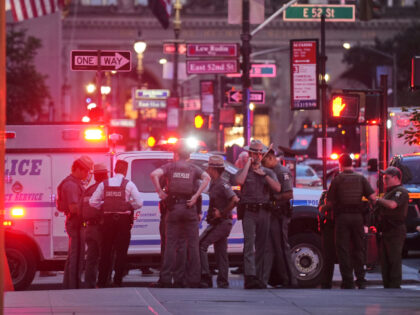
In the wake of the July 28, 2025, attack on NFL headquarters, Craig Clementi’s lawsuit against New York City zeroes in on the city’s self-inflicted vulnerability: a patchwork of gun-control rules that left a high-profile target essentially disarmed while the attacker, already prohibited from possessing firearms, simply ignored the law. Clementi’s complaint argues that the city’s “sensitive location” restrictions and carry-permit bottlenecks created a soft target in the heart of Manhattan, where law-abiding employees had no realistic means of mounting an immediate armed response. The irony is hard to miss—New York’s political class routinely touts its strict statutes as life-saving measures, yet the only people who reliably obey them are the very citizens the laws claim to protect.
For the 2A community, the case crystallizes a long-standing critique: when government designates entire zip codes and building types as no-carry zones, it effectively deputizes criminals with a monopoly on force inside those zones. Clementi’s filing will likely spotlight how the city’s discretionary permitting regime, already under scrutiny after the Supreme Court’s Bruen decision, failed to balance public safety with the fundamental right of self-defense. If the courts ultimately agree that New York’s restrictions rendered the building a predictable target, the precedent could ripple outward, forcing municipalities to justify not just the existence of gun-free zones but also the absence of any meaningful alternative security once those zones are declared.
Beyond the courtroom, the story underscores why shall-issue permitting and constitutional carry have gained traction nationwide: armed citizens inside otherwise vulnerable spaces have repeatedly disrupted active attacks before police arrive. New York’s refusal to adapt its policies post-Bruen now collides with the lived reality of a mass-casualty event at one of the nation’s most iconic addresses. Whether Clementi’s suit succeeds or stalls, it forces a public reckoning with the uncomfortable math that restrictive gun laws do not disarm predators—they merely disarm the law-abiding, leaving the rest of us to litigate the aftermath.


