

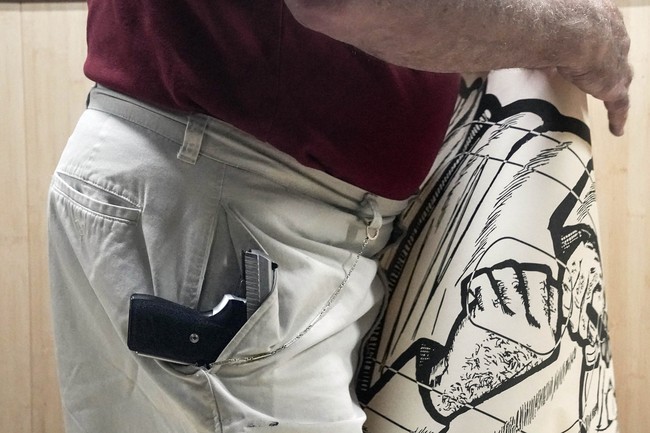
Nearly a third of Americans now carry firearms, and the jump to 29.8 percent concealed-carry participation by 2026 isn’t just a statistic—it’s a cultural verdict on how millions view personal security. After years of pandemic-era crime spikes, soft-on-crime policies in major cities, and a Supreme Court that finally affirmed the right to bear arms outside the home, ordinary citizens have voted with their holsters. The data reveal that permitless-carry states and shall-issue reforms didn’t merely expand numbers; they normalized everyday carry as a rational hedge against delayed police response times that still average well over five minutes in urban areas.
For the 2A community this surge is both validation and warning. Validation because it proves the right to keep and bear arms is not a fringe hobby but a mainstream insurance policy embraced by women, minorities, and first-time gun owners in record numbers. The warning lies in the political crosshairs: every new carrier is another data point anti-rights groups will cite to justify “public safety” restrictions, red-flag expansions, and magazine bans. The community’s task is to convert these numbers into durable political capital—pushing constitutional-carry nationwide, defeating liability schemes aimed at FFLs, and reminding legislators that the fastest-growing segment of gun owners expects their rights to travel with them, not evaporate at state lines.
The deeper implication is cultural normalization. When nearly one in three adults carries, the old “gun culture versus everyone else” framing collapses; the armed citizen becomes the statistical center, not the outlier. That shift pressures institutions—airports, universities, corporate campuses—to confront the reality that lawful carriers are their neighbors, customers, and employees rather than hypothetical threats. It also raises the stakes for training and mindset: higher carry rates mean the 2A movement must double down on education, de-escalation, and marksmanship so that the next decade’s millions of new carriers remain ambassadors rather than liabilities. In short, the research doesn’t just count guns; it counts a quiet revolution in how Americans have decided to meet uncertainty—with preparedness instead of dependence.


