

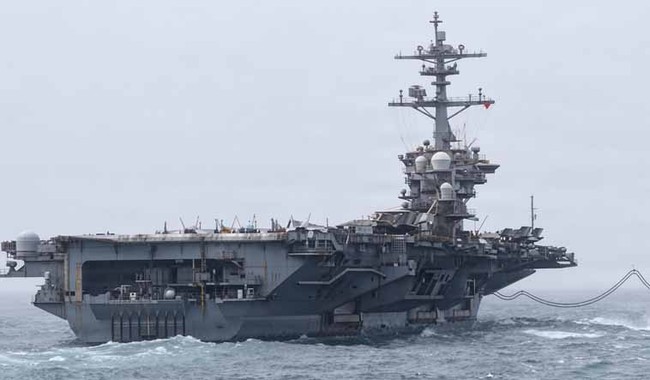
The mother’s blunt remark to the New York Times—that her sailor “didn’t sign up to be on a ship in the middle of the ocean”—lands like a live round in the middle of a debate that’s been simmering since the first carrier left Norfolk. What she’s really describing is the gap between the recruiting-poster promise of “see the world” and the reality of an open-ended deployment that keeps thousands of sailors beyond the horizon for months on end. That gap matters to the 2A community because the same families who send sons and daughters into harm’s way are also the ones who, back home, defend the right to keep and bear arms; when the mission stretches without clear purpose, public support for defense spending—and for the individual-liberty culture that underpins it—starts to fray.
Extend the deployment long enough and you don’t just stress sailors; you stress the entire ecosystem that sustains a volunteer force. Reservists miss drilling weekends, small businesses lose their National-Guard managers, and parents who once viewed military service as an honorable family tradition begin steering their kids toward trades that don’t require six-month blackout periods. A shrinking or disgruntled talent pool eventually shows up in readiness statistics, and readiness shortfalls are the exact justification gun-control advocates cite when they push to “do something” about so-called “weapons of war.” In other words, an overstretched Navy becomes an unwitting ally to policies that treat the Second Amendment as a privilege doled out by Washington rather than a right retained by citizens.
The Abraham Lincoln story is therefore more than a morale report; it’s a warning shot across the bow of strategic overreach. If the nation keeps asking a smaller and smaller cohort of families to carry an outsized burden, those families—and the broader public that cheers them on—will eventually re-examine whether endless forward presence is worth the invisible cost in lost weekends, strained marriages, and atrophied civic support for strong national defense. The 2A community has a stake in that re-examination: a military that retains public confidence is far less likely to become the blunt instrument used to justify restrictions on the very arms citizens rely on for their own security.


