

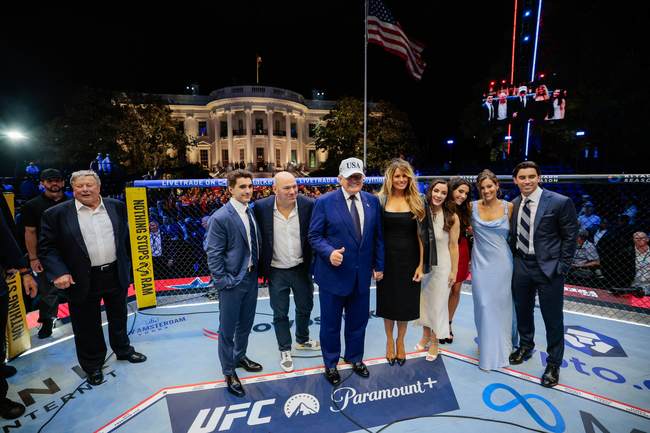
The image of a pristine White House lawn reduced to a scarred, muddy grid after UFC 250’s “Freedom Event” is more than a landscaping headache—it’s a snapshot of how the current administration treats the very symbols of American liberty. While the press fixates on turf replacement costs, the deeper story is that an event celebrating individual freedom, martial skill, and unapologetic patriotism was allowed to roll right up to the executive mansion’s doorstep. That proximity matters to the 2A community: it signals that the cultural ground is shifting, that the same institutions once reflexively hostile to guns and gun owners are now hosting spectacles built on the ethos of personal responsibility and self-defense. The grass will grow back; the precedent of normalizing armed-citizen culture at the highest levels of government may prove harder to uproot.
For Second Amendment advocates, the optics are instructive. Fighters who train daily with the same discipline and mindset that lawful gun owners bring to the range were welcomed onto federal property without the usual media freak-out over “militarization” or “toxic masculinity.” That acceptance didn’t happen by accident; it reflects years of grassroots work normalizing firearms ownership, constitutional carry, and the idea that strength—physical and civic—isn’t suspect. When the inevitable op-eds arrive lamenting “damage to federal property,” the 2A response should be crisp: the only lasting damage is to the narrative that patriotic, armed Americans are a threat rather than an asset. The lawn will be resodded long before the cultural battlefield is.
Looking ahead, the real implication is strategic. If an administration can green-light a combat-sports festival on the South Lawn, it can also green-light policies that treat shall-issue permitting, national reciprocity, and suppressor reform as routine governance rather than culture-war flashpoints. The aerial photo of torn-up turf is therefore less an indictment than a before-and-after: before, the default image of the White House lawn was velvet rope and velvet-gloved security; after, it’s boot prints, cheering crowds, and the implicit message that freedom leaves a mark—sometimes on the grass, always on the culture.


