

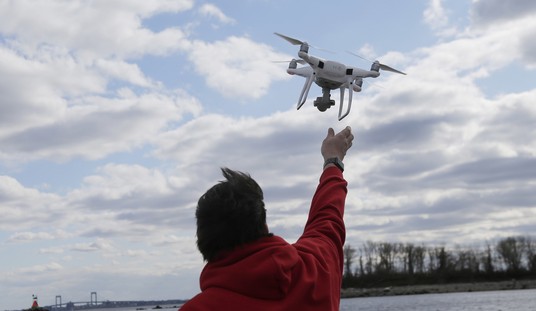
Massachusetts lawmakers are once again proving that nothing calms their nerves quite like passing legislation against imaginary threats. A new bill working its way through the State House would ban the possession, sale, and use of weaponized drones, complete with stiff penalties for anyone caught turning a quadcopter into a poor man’s cruise missile. The sponsors insist this proactive measure is essential for public safety, even as they quietly admit there have been zero documented cases of armed drones being used in any crime anywhere in the Commonwealth. It’s the legislative equivalent of buying flood insurance in the Sahara.
This latest exercise in security theater should set off alarm bells for the Second Amendment community. What begins as a ban on “weaponized drones” has a nasty habit of expanding definitions until it sweeps in everything from standard FPV racing rigs to sophisticated camera platforms that responsible gun owners might use for property surveillance or hunting reconnaissance. We’ve watched this movie before with “assault weapons,” “high-capacity magazines,” and “ghost guns.” Each time the threat was overhyped, the law was sold as narrowly tailored, and the restrictions somehow grew teeth that bite lawful citizens far harder than criminals. Massachusetts, a state already notorious for its suffocating gun control regime, now seems determined to preemptively kneecap a technology that could actually empower self-reliant Americans to monitor their own land more effectively than any police department ever could.
The deeper implication is philosophical. When politicians race to criminalize tools that don’t yet pose a real problem, they reveal their true priority: maintaining a monopoly on force and surveillance while disarming and disabling the citizenry’s ability to keep pace with technological change. Responsible gun owners have every reason to watch this bill closely and push back hard. Today it’s weaponized drones. Tomorrow it could be any drone capable of carrying a GoPro, then any drone within a certain distance of a “sensitive place,” and eventually any drone not registered with and approved by the same bureaucrats who think the AR-15 is a weapon of war. The right to keep and bear arms has always included the right to keep and bear arms with the best tools available for the job. Massachusetts lawmakers apparently disagree, and that should concern every free American who understands that technology waits for no legislature.


