

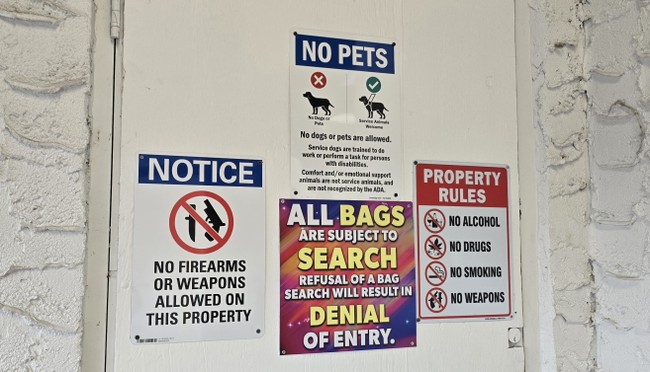
Montgomery County’s latest defense of its gun-free zones reveals a familiar pattern: officials framing Second Amendment objections as irrational while quietly expanding the very restrictions that courts have repeatedly struck down elsewhere. By insisting that these zones are “reasonable” and “common-sense,” the county sidesteps the core constitutional question—whether government can simply declare large swaths of public property off-limits to law-abiding carriers without meaningful tailoring or historical support. The DOJ’s involvement signals that federal enforcers see the same red flags that have already produced injunctions in New York, Illinois, and New Jersey, where similar “sensitive-place” regimes collapsed under Bruen scrutiny.
What makes the rhetoric especially telling is the inversion of burden: instead of demonstrating that these zones actually enhance safety, officials treat opposition itself as evidence of extremism. That framing ignores data from shall-issue states showing no uptick in gun violence at previously restricted locations once permitting standards were equalized, and it dismisses the practical effect on permit holders who must now reroute around schools, parks, and municipal buildings on pain of felony charges. For the 2A community, the episode underscores that post-Bruen litigation will be won not by debating policy preferences but by forcing jurisdictions to produce historical analogues they simply do not have—analogues that, so far, have proven elusive for the sweeping place-based bans now proliferating in blue strongholds.


