

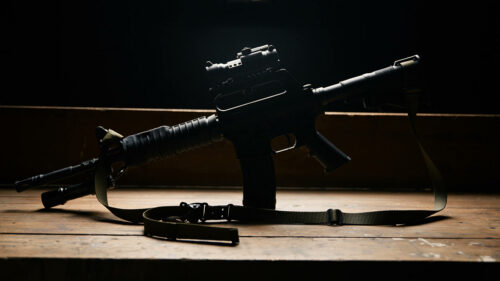
The Supreme Court’s move to hear two major AR-15 cases next term is less a retreat than a calculated repositioning, exactly as Mark Smith predicted. By letting the lower courts finish their work and letting the facts settle, the justices appear to be clearing the procedural underbrush so the eventual ruling can rest on a stronger factual and doctrinal foundation rather than on emergency applications or fractured stays. That approach frustrates activists who wanted an immediate nationwide injunction, but it also reduces the risk that a rushed decision gets picked apart on narrow grounds and leaves the core question—whether a flat ban on the most popular rifle in America can survive any level of scrutiny—squarely before the Court when the political and legal landscape is more favorable.
For the 2A community the lesson is patience paired with preparation. The delay gives gun owners, industry groups, and state attorneys general more time to build a record that emphasizes the AR-15’s ubiquity in lawful uses, its mechanical similarity to other protected arms, and the absence of historical analogues for disarming law-abiding citizens of the predominant militia arm of the modern era. It also forces lower courts to confront Bruen’s text-and-history test without the safety net of Supreme Court abstention, which may produce additional circuit splits that make eventual review almost inevitable. In short, the October 2026 term is shaping up to be the decisive showdown, and the strategic pause now is the price of a cleaner, more durable victory later.


