

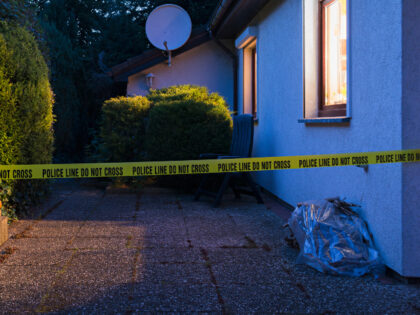
In the early hours of a Saturday night in Leesburg, Florida, a woman’s home became the scene of a life-or-death decision when her ex-boyfriend allegedly tried to batter his way inside. Rather than waiting for police who might arrive minutes too late, someone inside exercised the fundamental human right of self-defense, ending the threat with a single, decisive shot. The incident is a textbook reminder that the Second Amendment is not an abstract debating point; it is the legal recognition that every law-abiding citizen may meet lethal force with lethal force when seconds count and escape routes are cut off.
What stands out is how little the story needed to be sensationalized. No “assault weapon” was involved, no extended magazine, no exotic accessory—just an ordinary firearm in trained or at least willing hands. That simplicity undercuts the narrative that only police or SWAT teams can be entrusted with effective tools of protection. The data keep reinforcing the same pattern: defensive gun uses outnumber criminal gun uses by substantial margins in study after study, and the common denominator is a prepared defender, not the model of the gun. Leesburg simply adds another real-world data point to that ledger.
For the 2A community, the takeaway is twofold. First, the right to keep and bear arms is most often vindicated not in courtrooms or legislative chambers but in the doorway of an otherwise ordinary home. Second, every restriction that slows access to a firearm—waiting periods, gun-free zones, storage mandates—must be weighed against the very real cost measured in minutes and heartbeats. The woman in Leesburg did not need a press conference or a permit; she needed a fighting chance, and the Constitution ensured she had one.


