

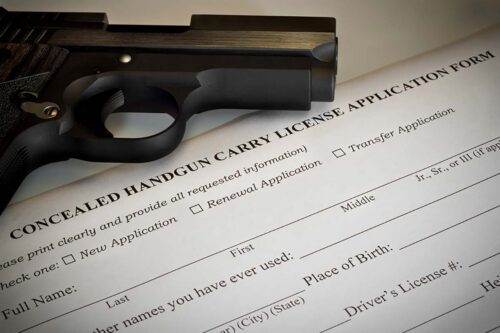
Louisiana’s decision to let 18-year-olds carry concealed handguns without a permit, while simultaneously refusing to issue them the very permits that would unlock federal school-zone protections, is a textbook case of the state talking out of both sides of its mouth. On one hand, lawmakers have embraced constitutional carry for young adults; on the other, they’ve left those same adults exposed to felony charges if they step within 1,000 feet of a school. The Firearms Policy Coalition rightly calls this a Second Amendment contradiction: the state recognizes that 18-year-olds are responsible enough to bear arms in public, yet it withholds the single piece of paper that would keep them from becoming instant criminals near a campus. It’s the legal equivalent of handing someone a driver’s license but banning them from every road that leads to work.
For the broader 2A community, the move exposes a growing fault line between “constitutional carry” victories and the lingering patchwork of federal restrictions that still treat young adults as second-class citizens. While Louisiana’s reform is a win on paper, it underscores how easily states can claim to expand rights while leaving critical gaps that only permitting schemes—or, better yet, a repeal of the federal Gun-Free School Zones Act—can fill. The result is a chilling effect: an 18-year-old who lawfully carries to class or a part-time job near campus risks prosecution not because the state distrusts the individual, but because federal law still presumes young adults are too dangerous to be armed near schools. That presumption is increasingly hard to square with Bruen’s history-and-tradition test, and Louisiana’s half-measure may become Exhibit A in the next round of litigation.
Ultimately, the episode is a reminder that true carry reform cannot stop at the state line; it must confront the federal overlay that continues to criminalize the very conduct states now bless. Until Congress or the courts dismantle the school-zone prohibition for law-abiding adults, 18-year-olds in Louisiana—and in every other constitutional-carry state—will enjoy a right that exists only until they walk past a playground. The 2A community should treat this not as a finished reform, but as fresh evidence that age-based disarmament, whether by state or by federal statute, remains incompatible with the Second Amendment’s text and history.


