

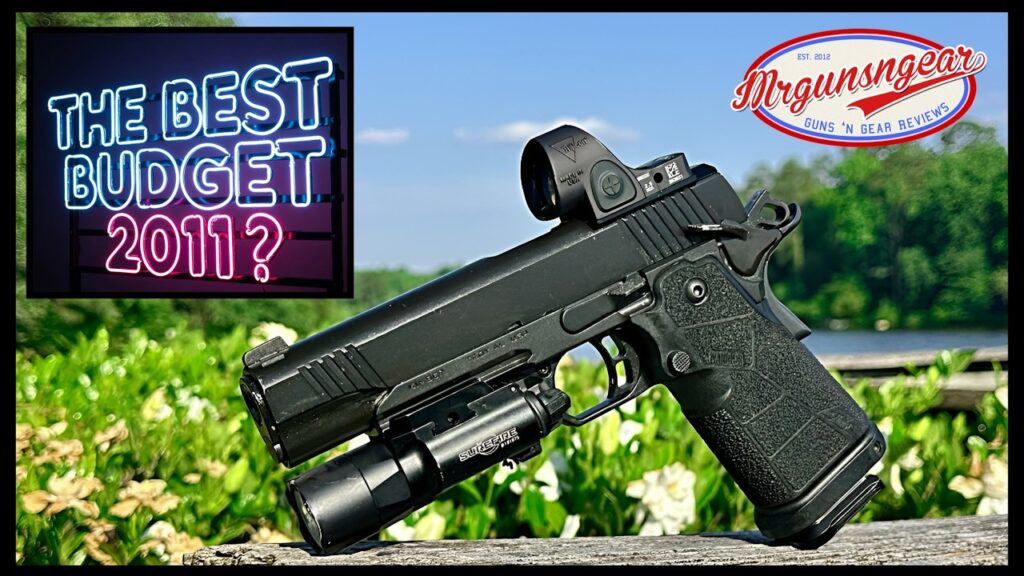
The Kimber DS Warrior arrives at a moment when the 2011 platform is no longer the exclusive domain of custom shops and competition shooters; it’s becoming the new “duty-grade” 1911 for civilians who want double-stack capacity without surrendering the crisp trigger and crisp ergonomics that made the single-stack iconic. At roughly half the price of a Staccato or a full-custom Infinity, the DS Warrior positions Kimber as the value play in a market that has historically rewarded buyers willing to spend four figures on a pistol that actually runs. What’s interesting is how Kimber is threading the needle between its own tarnished reputation for QC hiccups and the current demand for an American-made, optics-ready 2011 that doesn’t require a gunsmith before it leaves the safe. If the gun proves reliable out of the box—and early range reports suggest the extractor and feed-ramp geometry have been revised—Kimber may have finally converted its brand equity into something the 2A community can actually deploy rather than merely admire on a table.
For the broader culture-war conversation around domestic manufacturing, the DS Warrior is a quiet but pointed rebuttal to the notion that “budget” and “American-made” are mutually exclusive in the 2011 space. Every imported double-stack 2011 that undercuts it on price is also underscoring how tariff policy, labor costs, and regulatory overhead shape what ends up in American holsters. Kimber’s willingness to absorb those costs while still hitting a street price that competes with Turkish and Filipino clones sends a signal: the 2A consumer now has a viable off-the-shelf choice that keeps tooling and skilled labor inside U.S. borders. That matters less for abstract patriotism than for supply-chain resilience; when the next panic-buy or component shortage hits, a pistol whose frame, slide, and barrel are all cut within a single time zone is easier to support with spare parts than one whose small-parts kits vanish behind an ocean and a 90-day lead time. In short, the DS Warrior isn’t just another gun review—it’s a data point in the ongoing argument over whether American firearms companies can still deliver volume without surrendering either quality or the cultural high ground.


