

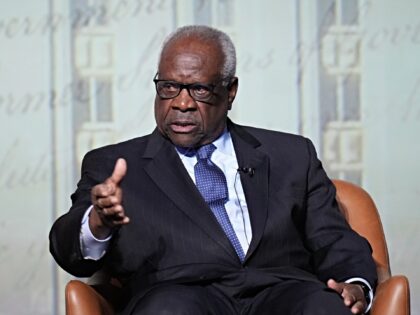
Justice Thomas’s concurrence in Hemani isn’t just a footnote—it’s a constitutional flare shot across the bow of federal gun-control architecture. By zeroing in on Congress’s claimed authority to police the mere movement of firearms from one state to another, Thomas is reminding everyone that the Commerce Clause was never intended to turn the entire country into a single, borderless regulatory zone for the exercise of a fundamental right. For decades, gun owners have lived under the fiction that a pistol bought in Arizona magically becomes a federal matter the moment it crosses into Nevada; Thomas is signaling that this jurisdictional sleight-of-hand may finally be ripe for re-examination.
The practical stakes are enormous. If the Court eventually follows Thomas’s logic, entire thickets of overlapping federal statutes—from the Gun Control Act’s interstate-transfer rules to portions of the National Firearms Act—could be peeled back to their proper constitutional limits. That would not only simplify compliance for law-abiding carriers and FFLs, but it would also re-anchor regulation where the Founders placed it: with the states closest to the people. The 2A community has spent years chipping away at incorporation barriers; Thomas is now inviting the next logical step—pushing back against the notion that Washington enjoys near-plenary power once a gun leaves its home state.
Critics will cry that such a ruling would “create a race to the bottom,” but that argument ignores both federalism’s design and the empirical reality that shall-issue states with strong preemption statutes already enjoy lower violent-crime rates than many high-regulation jurisdictions. Thomas’s opinion plants a marker: the Second Amendment is not a privilege doled out by congressional grace, and the Commerce Clause is not a perpetual license to federalize every firearm transaction. For those who view the right to keep and bear arms as truly belonging to the people rather than the administrative state, the concurrence is less a prediction than a roadmap.


