

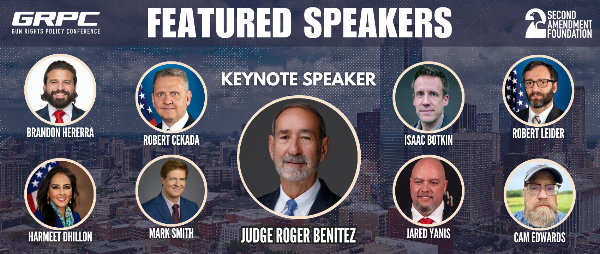
Judge Roger Benitez’s appearance at next year’s Gun Rights Policy Conference alongside Assistant Attorney General Harmeet Dhillon signals more than a marquee speaking lineup—it’s a deliberate pairing of the judiciary’s most outspoken defender of the Second Amendment with the Justice Department’s top civil-rights enforcer. Benitez, whose 2021 ruling in Duncan v. Bonta shredded California’s magazine ban with the memorable line that “a modern sporting rifle is like a Swiss Army knife,” has become the circuit’s most reliable textualist on the right to keep and bear arms. Dhillon, meanwhile, has already signaled that the second Trump administration intends to weaponize federal civil-rights statutes against state gun-control regimes, a strategy that could turn routine local ordinances into federal cases overnight. Together they represent the two fronts—bench and bureaucracy—where the next decisive battles over carry, magazine capacity, and “assault weapon” restrictions will be fought.
For the broader 2A community, the optics are unmistakable: the institutional momentum that once favored gun-control litigation shops is shifting toward enforcement of the individual right. Benitez’s willingness to issue nationwide injunctions and Dhillon’s pledge to open “pattern-or-practice” investigations into anti-gun jurisdictions mean that even deep-blue strongholds could soon face consent decrees or funding cut-offs. That one-two punch also raises the stakes for the Supreme Court’s pending assault-weapons and sensitive-places cases; a favorable ruling there, paired with an activist bench and an activist DOJ, could accelerate a nationwide right-to-carry regime faster than any single piece of legislation. The GRPC keynote, in short, isn’t just a speaking slot—it’s a preview of the legal architecture that will either lock in the Bruen revolution or expose its limits.


