

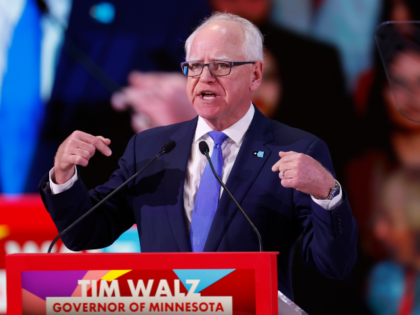
A federal judge’s decision to shield Minnesota Governor Tim Walz and his Democratic allies from DOJ subpoenas isn’t just a procedural footnote—it’s a flashing warning light for anyone who still believes the administrative state plays fair when Second Amendment rights are on the line. The subpoenas were aimed at untangling alleged ties between Somali-linked corruption and state-level politics, yet the court slammed the door before investigators could even ask basic questions. That kind of preemptive insulation sends a clear message: if you’re inside the right political circle, your records and communications are effectively off-limits, even when federal prosecutors smell pay-to-play schemes that could easily bleed into gun-control legislation or ATF enforcement priorities.
For the 2A community, the stakes are obvious once you connect the dots. Minnesota already ranks among the states most eager to import California-style restrictions—assault-weapon bans, magazine limits, red-flag expansions—and those policies don’t materialize in a vacuum. They’re often greased by the same networks of campaign cash, nonprofit pass-throughs, and ethnic-interest lobbies that the DOJ wanted to examine. When judges treat subpoenas targeting those networks as presumptively abusive, they’re not protecting due process; they’re protecting the machinery that turns political donations into gun-control statutes. The result is a chilling effect: federal watchdogs hesitate, state-level corruption festers, and the next “emergency” gun bill sails through on greased rails because no one was allowed to follow the money.
The larger implication is structural. If the judiciary can declare entire classes of political figures immune from scrutiny whenever the requested documents might embarrass the ruling coalition, then enforcement of federal gun laws becomes a one-way street—aggressive against citizens and dealers, toothless against the officials who write the rules. That asymmetry doesn’t just erode public trust; it tilts the practical balance of power away from the people the Second Amendment was designed to empower. Until courts apply the same skepticism to protective orders for politicians that they apply to protective orders for gun owners, the administrative state will keep deciding which scandals get investigated and which ones get memory-holed.


