

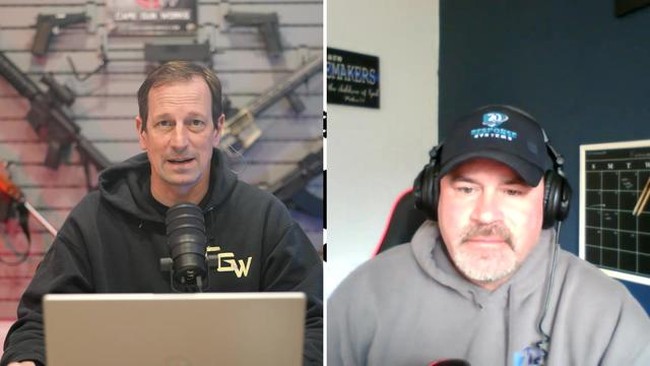
Jason from 3D Response Systems isn’t selling another “trust the experts” plan—he’s selling time. In a world where the average active-shooter event is over before the first patrol car arrives, his layered approach of reinforced doors, ballistic panels, and pre-planned cover points turns every classroom into a hardened delay mechanism that buys responders the minutes they need. That’s the part the gun-control crowd never wants to discuss: hardening the target works whether the bad guy has a rifle, a handgun, or a knife, and it doesn’t require waiting for another round of symbolic legislation that criminals will ignore anyway.
For the 2A community the takeaway is straightforward—rights without responsibility are just talking points. Jason’s insistence that schools adopt the same kind of prescriptive safety codes we already apply to fire exits and earthquake standards reframes the debate from “how do we restrict lawful owners” to “how do we actually keep kids alive until help shows up.” Parents and school boards who treat this as optional are effectively choosing political theater over engineering; the data on response times isn’t changing, but the willingness to install practical barriers and train staff on communication and concealment can change tomorrow.
The larger implication is that real school safety is a force-multiplier for the Second Amendment itself. When communities demonstrate they can reduce casualties through cover, concealment, and faster coordination, the emotional argument for banning the tools lawful citizens use for the same purpose loses its urgency. Jason’s system doesn’t replace armed responders—it simply refuses to treat unarmed students and teachers as static targets until those responders arrive. That’s the conversation the 2A world should be amplifying, because every hardened door and ballistic panel installed today is another data point proving that preparedness, not prohibition, is the adult answer to lethal threats.


