

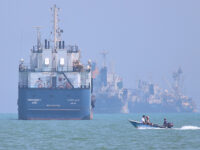
Iran and Oman’s decision to stand up a joint “Str Strait of Hormuz Committee” is less about bureaucratic paperwork and more about locking down the world’s most critical maritime choke-point at a moment when Tehran feels encircled. By formalizing coordination on navigation, security, and “environmental protection,” the two neighbors are quietly building a legal and operational framework that could let them throttle tanker traffic with a veneer of sovereign legitimacy. For anyone watching energy markets—or the price of every commodity that rides on diesel—this is the maritime equivalent of two neighbors agreeing to share the only key to the neighborhood gate.
For the 2A community the signal is unmistakable: when a regime that chants “Death to America” gains de-facto veto power over 21 million barrels of oil a day, the case for an armed citizenry writes itself. A disruption here spikes fuel prices overnight, empties grocery shelves inside a week, and hands any would-be confiscator the ultimate pretext—“national emergency.” The lesson gun owners have repeated since 1775 still holds: the only reliable check on centralized power, whether it sits in Washington or Tehran, is a populace that can feed and defend itself without waiting for permission from the very authorities most tempted to abuse a crisis.


