

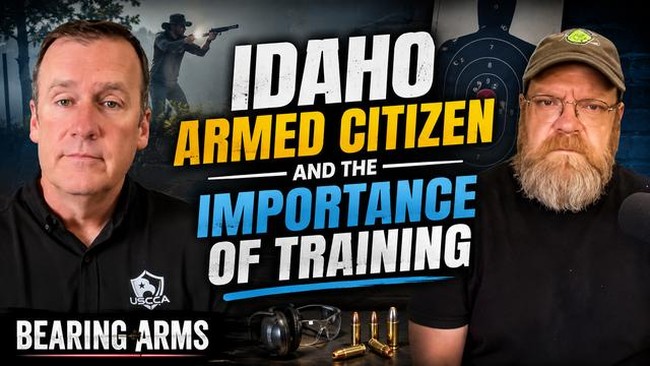
When Jordan Salinas stepped into the path of an active shooter in Idaho, he wasn’t just another armed citizen reacting on instinct—he was the product of deliberate, ongoing training that turned a potential massacre into a contained tragedy. The footage and witness accounts reveal a man who didn’t merely carry a firearm; he carried the muscle memory, decision-making framework, and emotional discipline that only consistent, realistic preparation can instill. In a state where constitutional carry is the law, Salinas’s story underscores a truth the gun-control lobby prefers to ignore: the difference between a gun in a holster and a life saved often comes down to hours spent on the range, not the model of the pistol.
Rob Chadwick’s conversation with Cam peels back the tactical layers—how Salinas’s positioning, his use of cover, and his split-second assessment of bystanders mirrored the very drills former FBI agents run in Hogan’s Alley. That alignment isn’t coincidence; it’s evidence that civilian training programs, when taken seriously, can replicate the stress inoculation once reserved for law enforcement. For the 2A community, the takeaway is both empowering and sobering: the right to keep and bear arms is meaningless without the parallel responsibility to maintain proficiency. Every range session, every force-on-force scenario, every legal-update class is an investment that can convert a law-abiding carrier into the last line of defense when seconds count.
The broader implication is cultural. As more states adopt permitless carry, the narrative that “more guns equal more chaos” collapses each time a trained civilian stops a threat before police arrive. Salinas’s story should be weaponized—not with rhetoric, but with range fees, training manuals, and a renewed commitment to the idea that the Second Amendment is a practice, not a permission slip. The armed citizen who treats training as optional is a liability; the one who treats it as non-negotiable becomes the quiet professional standing between order and atrocity.


