

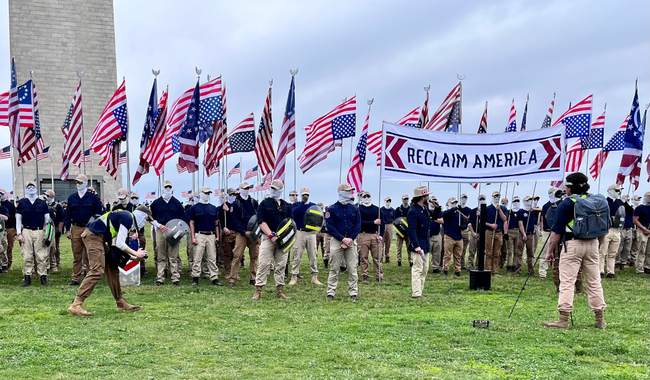
Hundreds of Patriot Front members marching through the nation’s capital on the Fourth of July sent a jolt through social media and cable news, but the real story isn’t the optics—it’s the reminder that organized, visibly armed groups still operate in the open while the 2A community continues to absorb the political fallout. The footage of masked men in matching khakis and shields moving in tight formation looked less like a celebration of independence and more like a paramilitary parade, instantly handed to anti-gun outlets as fresh evidence that “extremists” are the true face of gun culture. That framing ignores the fact that the vast majority of lawful carriers and open-carry demonstrators reject these tactics, yet the images travel farther and faster than any counter-narrative from mainstream gun owners.
The deeper implication for the 2A world is that optics and message discipline now matter as much as legal arguments. When a small, disciplined formation can dominate headlines on a national holiday, it underscores how quickly the Overton window on public carry can shift if the loudest visible actors are those most eager to provoke rather than persuade. Responsible gun owners who train, vote, and advocate without masks or shields suddenly find themselves explaining why their rights shouldn’t be curtailed because of someone else’s street theater. The episode also highlights the value of groups that combine open carry with community service and clear messaging—efforts that inoculate the broader movement against guilt by association.
Longer term, the July 4 march is a warning shot: if the 2A community cannot police its own public image and distance itself from groups whose stated goals extend far beyond self-defense, legislators will keep using those images as justification for new restrictions. The right to keep and bear arms is strongest when it is exercised by citizens who look like the neighbors next door, not a private army on parade.


