

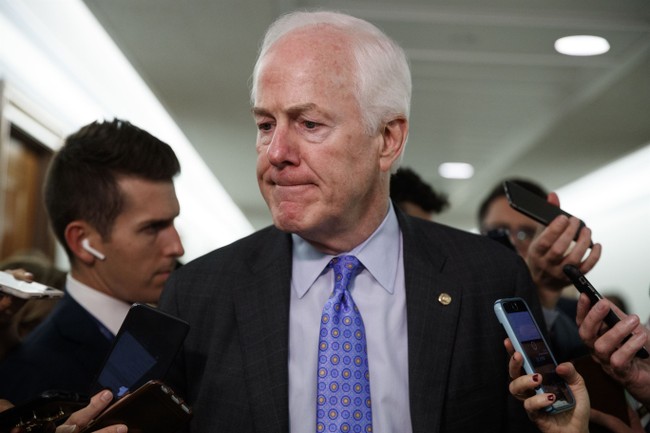
Sen. John Cornyn’s swipe at grassroots conservatives backing the SAVE America Act landed with a thud because it exposed the same old Beltway reflex: treat gun owners as a liability rather than the constituency that actually delivers elections. The Texas senator’s comments framed the bill’s supporters as fringe agitators, yet the backlash he triggered revealed how out of step that posture has become even inside his own caucus. By painting law-abiding citizens who simply want statutory protection for the Second Amendment as political extremists, Cornyn handed pro-2A groups a ready-made contrast between politicians who posture at the range and those who treat the right to keep and bear arms as non-negotiable.
The episode also underscores a broader realignment inside the GOP. While Cornyn still clings to the old “go along to get along” playbook that produced bump-stock bans and red-flag flirtations, newer voices recognize that every incremental concession invites the next demand from gun-control advocates. The SAVE America Act’s core provisions—national reciprocity, liability shields for FFLs, and explicit rejection of registration schemes—directly address the structural weaknesses that have let ATF reinterpretations and state-level copycat laws erode rights without congressional pushback. When Cornyn’s criticism ricocheted, it signaled that rank-and-file Republicans are no longer willing to trade those structural fixes for vague promises of future “bipartisan” restraint.
For the 2A community the takeaway is straightforward: electoral energy now flows toward candidates who treat statutory codification of existing rights as the baseline, not the ceiling. Cornyn’s misstep accelerates the pressure on remaining institutional Republicans to decide whether they will defend the right to arms with legislation that survives court packing or administrative whim, or whether they will continue auditioning for media approval by distancing themselves from their own voters. In 2026 that choice will be measured less by rhetoric and more by which side actually moves the law.


