

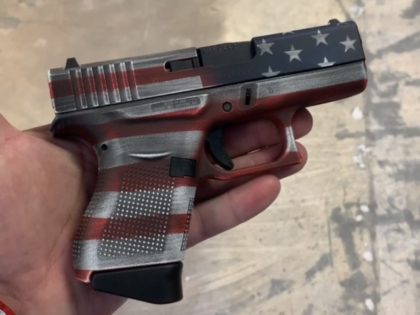
In a move that feels less like public safety policy and more like a calculated political flex, Maryland’s attempt to single out Glock pistols has drawn an immediate and coordinated legal counterstrike from the Firearms Policy Coalition, the National Rifle Association, and the Second Amendment Foundation. The suit argues that the state’s ban is not only constitutionally infirm but also rests on the same flawed premise that has repeatedly failed in federal court: that a manufacturer’s name or a pistol’s popularity can be used as a proxy for banning an entire class of arms in common use. By targeting Glock—the most widely adopted handgun platform in America—the law effectively asks courts to pretend that millions of law-abiding owners suddenly became threats overnight, a claim the plaintiffs are eager to dismantle with both historical tradition and contemporary data.
What makes this litigation especially noteworthy is the breadth of the coalition behind it. FPC brings its trademark precision-strike litigation style, the NRA supplies institutional muscle and decades of precedent, and SAF contributes its long record of incremental but relentless Second Amendment victories. Together they signal to other states that any attempt to weaponize product-specific bans will face a unified, well-funded, and doctrinally sophisticated response. For the broader 2A community the message is twofold: first, that even popular, mainstream firearms are no longer safe from prohibitionist experimentation; and second, that the post-Bruen landscape is already producing faster, sharper pushback than the old “two-step” era ever allowed.
The stakes extend well beyond Maryland’s borders. If the courts accept the state’s rationale, the same logic could be repurposed against any manufacturer whose products prove too effective or too popular, turning the Second Amendment into a popularity contest decided by legislators rather than text, history, and tradition. Conversely, a decisive win here would further codify that the right to keep and bear arms protects the actual arms people commonly choose for self-defense, not a government-approved shortlist. Either outcome will shape the next wave of state-level restrictions and the defensive litigation required to meet them.


