

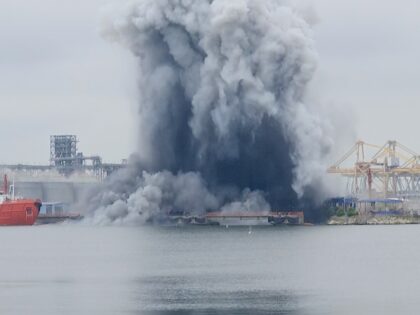
The drone that blew itself apart just off Romania’s Black Sea coast wasn’t some high-tech wunderwaffe; it was a low-cost, surface-skimming craft built around commercial GPS, off-the-shelf explosives, and a fiberglass hull—essentially a floating IED with a propeller. That same recipe of cheap sensors, open-source flight controllers, and modular payloads is already showing up in hobbyist and small-arms-adjacent circles here at home. When a nation-state can field dozens of these for the price of a single missile, the old assumption that only governments field precision weapons starts to look quaint, and the same components that let a Ukrainian operator steer a drone into a Russian warship can just as easily be bolted onto a terrestrial chassis or even a small fixed-wing airframe.
For the 2A community the takeaway isn’t that civilians will soon be launching sea drones at each other; it’s that the same decentralized supply chain—FPV cameras, Li-Po packs, 3-D-printed mounts, and encrypted mesh radios—is already in the hands of private citizens. The regulatory reflex in Washington will be to treat every new class of unmanned system the way the NFA treated short-barreled rifles in 1934: tax it, register it, and ultimately restrict who can own the pieces. Yet the technology curve is moving faster than any paperwork regime; once the knowledge is public, the hardware is dual-use by default. The question isn’t whether hobbyists or preppers will experiment with these tools, but whether the Second Amendment’s protection of arms “in common use” will be read to include the digital nervous system that now turns a rifle—or a jet-ski—into a networked weapon.
Romania’s beach evacuation is therefore more than a headline about one stray drone; it’s a live-fire demonstration that the future of conflict belongs to whoever can iterate fastest with off-the-shelf parts. That reality collides directly with the American debate over whether the right to keep and bear arms stops at the trigger or extends to the entire ecosystem of modern small arms. If legislators try to criminalize the components rather than the criminal misuse, they’ll be repeating the same century-old mistake: attempting to regulate a capability that has already escaped into the wild.


