

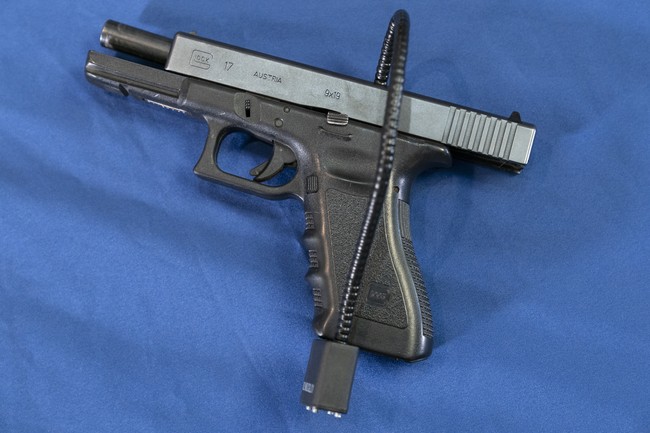
A federal judge just green-lit a rule that bars law-abiding adults from keeping a firearm in their own home if they happen to run a daycare or serve as foster parents—effectively turning the Second Amendment into a conditional privilege that hinges on whether you open your doors to children. The decision treats the mere presence of kids as a compelling state interest that overrides the core right to keep and bear arms for self-defense, even though the homes in question are private residences, not government facilities. That framing is a quiet but significant expansion of the “sensitive places” doctrine, one that could metastasize to any household that occasionally hosts minors—think grandparents, aunts, or neighbors who babysit.
For the 2A community, the ruling is a warning shot: courts are increasingly willing to let public-safety rhetoric swallow the plain text of the Constitution when children are invoked. Rather than demanding narrow tailoring or historical analogues, the judge accepted the government’s assertion that guns and kids are categorically incompatible, ignoring data showing that secure storage—not blanket prohibition—addresses the real risk. The practical effect is to price some families out of fostering or in-home childcare, shrinking the pool of willing providers at a time when both systems are already stretched thin.
Longer term, this precedent invites further encroachments: if a daycare triggers disarmament, why not a home with visiting grandchildren, or one near a school bus stop? The opinion’s logic converts the Second Amendment from a fundamental right into a regulatory concession that can be withdrawn whenever officials identify a sympathetic constituency. Unless higher courts restore the historical baseline that the right to keep arms in one’s own home is presumptively protected, every household that interacts with children becomes a potential litigation target.


