

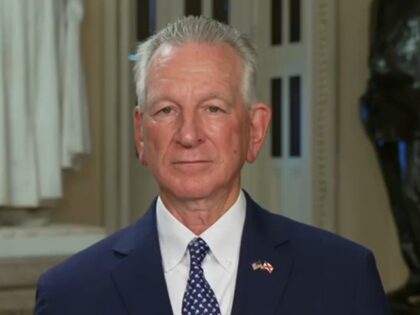
Sen. Tommy Tuberville’s blunt warning about California Democrats simply “coming up with the amount of votes they need” lands like a warning shot across the bow of every law-abiding gun owner who still believes elections are settled at the ballot box rather than in back rooms. The Alabama senator is pointing to a state where the same political machine that has already banned standard-capacity magazines, serialized ammunition, and “ghost guns” now appears poised to manufacture whatever margin it requires to keep that agenda rolling. For Second Amendment supporters, the message is unmistakable: when the electoral process itself becomes suspect, the constitutional right to keep and bear arms shifts from a policy debate to a last-line-of-defense question.
California’s track record supplies the context. Decades of one-party rule produced the nation’s most restrictive gun-control regime—assault-weapon bans, microstamping mandates, and a permitting system so byzantine that even approved handguns vanish from the “safe” roster. Those laws were passed by legislators who never feared losing their seats; now Tuberville suggests the same insulated majority may be prepared to guarantee its permanence by any arithmetic necessary. The 2A community has watched this pattern play out in other deep-blue states where voter-integrity measures are denounced as “suppression” while mail-in expansions and same-day registration sail through without scrutiny. When the counting process itself is no longer trusted, every new restriction on magazines or semi-automatic rifles carries an extra sting: it may have been enacted by a legislature that no longer reflects the actual will of the people.
The practical implication for gun owners is strategic rather than rhetorical. California’s model is already being exported through federal legislation, international model codes, and litigation aimed at the Supreme Court’s Bruen decision. If the electoral foundation beneath that model is shaky, then challenges to magazine bans, carry restrictions, and the pistol-roster regime take on renewed urgency—not merely as policy disputes but as checks against a political class that may no longer be removable at the polls. Tuberville’s remark is less about one Senate race than about the recognition that, when ballots become optional, ballots alone will not protect the right to bear arms.


