

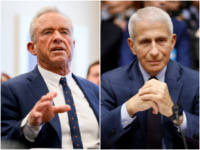
Robert Kennedy Jr.’s latest broadside against Dr. Anthony Fauci lands like a well-placed shot on a steel plate—loud, unmistakable, and impossible to ignore. In the interview, Kennedy accuses the longtime NIAID director of presiding over a “medical cartel” that weaponized public-health edicts to strip Americans of bodily autonomy, economic freedom, and, crucially, the right to defend themselves. While the conversation centers on vaccines and mandates, Kennedy’s broader indictment—that unelected bureaucrats can nullify constitutional liberties under the banner of “emergency”—should ring alarm bells for anyone who values the Second Amendment. After all, if a public-health agency can shutter gun stores as “non-essential,” close ranges under the guise of social distancing, or green-light ATF rules by simple decree, then the right to keep and bear arms rests on the same shaky ground as every other enumerated freedom.
What makes Kennedy’s critique especially salient for gun owners is his documentation of how federal agencies game the Administrative Procedure Act to bypass Congress and the courts. The same procedural shortcuts used to redefine “frame or receiver,” ban bump stocks, or pressure credit-card processors into tracking firearm purchases could just as easily be redeployed during the next declared crisis—whether another virus or a spike in urban crime. Kennedy’s insistence that citizens must retain ultimate authority over their own risk calculus mirrors the pro-2A argument that individuals, not agencies, decide when, where, and how to exercise their right to self-defense. In both domains, the battle is against the centralization of power in unaccountable hands.
For the firearms community, the takeaway is strategic as much as philosophical. Kennedy’s willingness to challenge entrenched regulators signals a potential cross-aisle opening: an opportunity to recruit civil-libertarian voices who may not own guns but instinctively recoil at the notion that government can flip constitutional rights on and off like a light switch. The prudent move is to meet that outreach with hard data—showing how pandemic-era edicts mapped onto gun-store closures, ammunition shortages, and rushed rulemaking—rather than reflexive partisan dismissal. If the administrative state can redefine public health overnight, it can redefine “public safety” just as quickly; eternal vigilance, it turns out, demands watching every alphabet agency, not just the ATF.


