

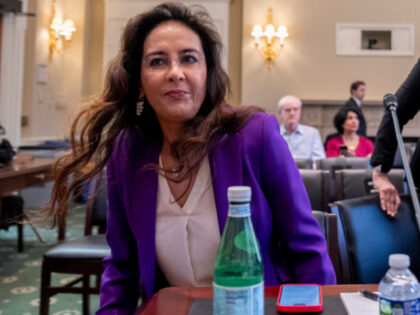
In a candid exchange with Breitbart News, Harmeet Dhillon underscored a truth the gun-control crowd prefers to ignore: when the Second Amendment is sidelined, ordinary citizens become easy targets rather than equal participants in their own defense. Dhillon’s phrasing—“sitting ducks”—isn’t rhetorical flourish; it captures the lived reality in jurisdictions where permitting schemes, magazine bans, and “may-issue” carry rules have disarmed law-abiding residents while leaving criminals undeterred. Her point lands with particular force because she speaks from the Department of Justice’s Civil Rights Division, where the mismatch between policy and public safety is impossible to wave away with talking points about “common-sense” restrictions.
What makes Dhillon’s remarks especially potent for the 2A community is the reminder that self-defense is not a privilege dispensed by bureaucrats but a civil right rooted in the same constitutional soil as free speech and due process. Every new restriction that lengthens the distance between a law-abiding citizen and an effective firearm widens the power imbalance between predator and prey. Data from shall-issue states show violent crime often falls after reforms that trust citizens with carry rights; conversely, cities that treat the Second Amendment as an afterthought continue to post body counts that no amount of “gun-free zone” signage can explain. Dhillon’s warning therefore functions as both diagnosis and prescription: restore robust protections for the individual right to keep and bear arms, or accept a two-tiered society in which only the connected and the criminal remain armed.
For activists and legislators still tempted by incremental infringements, Dhillon’s comments should serve as a reality check rather than another partisan volley. The right to arms is not a cultural preference or regional quirk; it is the mechanism that prevents free people from being reduced to dependents of the state for their very lives. When that mechanism is impaired, the result is not merely statistical—it is the daily calculation made by millions of Americans who must decide whether their family’s safety is worth the paperwork, the fees, and the political hostility of the licensing regime. Dhillon’s blunt assessment reframes the debate: either the Second Amendment remains a meaningful check on vulnerability, or the phrase “shall not be infringed” becomes a polite fiction while citizens wait, unarmed, for help that may never arrive in time.


