

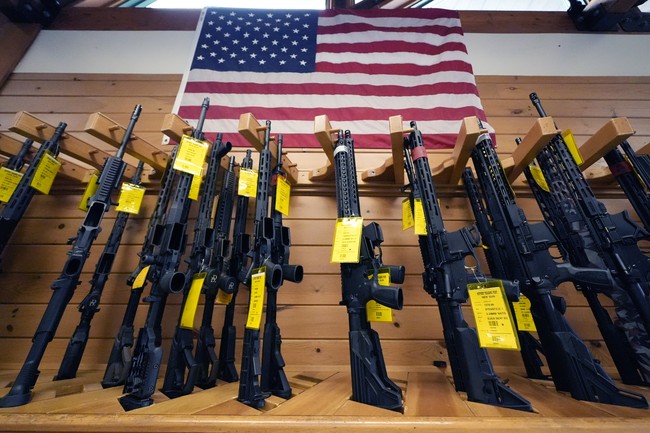
The Supreme Court’s decision to hear a challenge to an assault-weapons ban is sending Everytown into predictable spasms of outrage, and that reaction itself tells us everything we need to know about how fragile their legal position has become. For years the gun-control lobby has leaned on the notion that certain semi-automatic rifles are somehow outside the Second Amendment’s protection, a claim that lower courts have indulged with increasingly tortured reasoning. Now that the nation’s highest court is poised to apply the Bruen test—historical tradition rather than judicial interest-balancing—Everytown’s talking points about “common-sense restrictions” suddenly look like relics of the pre-Bruen era rather than settled law.
What makes the moment especially rich is the timing: millions of AR-platform rifles are already in civilian hands, and the features Everytown wants banned—pistol grips, adjustable stocks, flash hiders—are functionally indistinguishable from features found on countless other lawful firearms. If the Court follows its own recent precedent, the question won’t be whether these rifles are “unusually dangerous,” but whether the historical record shows a tradition of banning arms in common use for lawful purposes. That standard is a steep climb for any jurisdiction hoping to keep its ban on the books, and Everytown’s panic suggests they know it.
For the broader 2A community the stakes are straightforward: a favorable ruling would not only strike down the challenged ban but also set precedent that makes similar restrictions in other states far harder to sustain. Conversely, even a narrow loss would still force lower courts to confront the Bruen framework instead of dodging it, accelerating the ongoing realignment of Second Amendment jurisprudence. Either way, the fact that the Supreme Court is willing to wade back into the “assault weapon” debate signals that the era of treating the right to keep and bear arms as a second-class freedom may finally be drawing to a close.


