

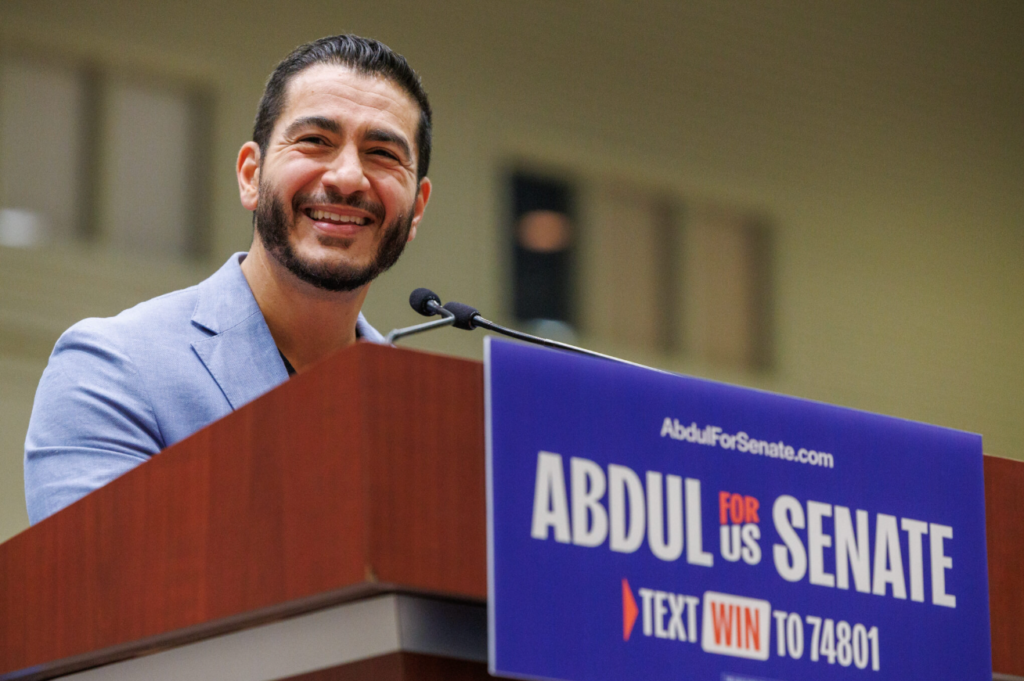
Abdul El-Sayed’s offhand remark that Americans might “trade” the Second Amendment for a government-guaranteed right to health care is more than a policy trial balloon—it’s a window into how a growing faction of the Democratic Party now views constitutional rights as negotiable commodities rather than pre-political guarantees. By framing the Bill of Rights as a zero-sum ledger where one enumerated protection can be swapped for a newly invented entitlement, El-Sayed telegraphs a worldview in which the individual right to keep and bear arms is merely one line-item among many, subject to legislative horse-trading whenever political fashion shifts. That perspective is fundamentally at odds with the Founders’ understanding that certain rights are inalienable precisely because they are not granted by government and therefore cannot be bartered away by it.
For the 2A community, the episode is a useful early-warning signal. El-Sayed is not an outlier; he is a credentialed, media-savvy candidate whose rhetoric echoes language already circulating in academic and activist circles—calls to “rebalance” the Constitution, to treat gun ownership as a conditional privilege rather than a right, and to condition its exercise on the satisfaction of other policy preferences. If such thinking migrates from campaign-trail hypotheticals into actual legislation or judicial reasoning, the practical effect would be a two-tiered rights regime: rights favored by progressive coalitions would expand, while the Second Amendment would be the designated offset. The result is not compromise but the slow conversion of a constitutionally protected liberty into a discretionary benefit that can be withheld whenever the political class decides the trade is worth making.
The broader implication is strategic as well as philosophical. Gun owners who treat each new “reasonable regulation” as an isolated ask miss the cumulative logic on display here: once rights are viewed as interchangeable, every restriction becomes a down payment on the next one. The candid talk of an outright swap should therefore sharpen, not soften, opposition to measures that condition, register, or ration the exercise of the right to keep and bear arms. In an environment where influential voices are already comfortable proposing to repeal constitutional text in exchange for favored policy outcomes, vigilance is not paranoia—it is simple pattern recognition.


