

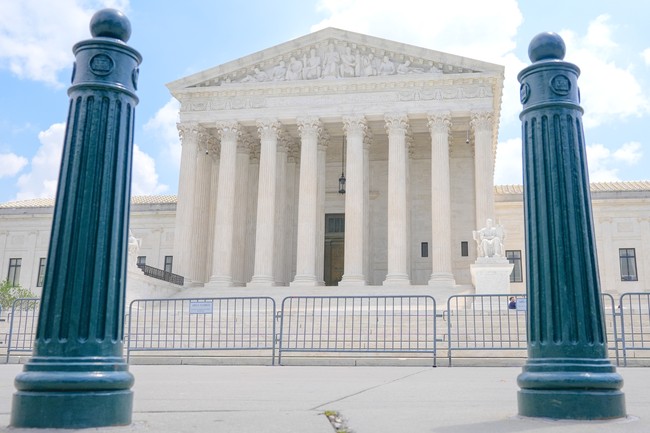
The Supreme Court’s recent move to tackle long-standing Second Amendment questions marks a pivotal shift that gun owners have been waiting for since the Heller and Bruen decisions. Rather than leaving lower courts to invent their own balancing tests, the justices are now signaling they will directly confront issues like magazine capacity restrictions, “assault weapon” bans, and the scope of sensitive-place carry prohibitions. This is more than docket management; it’s the Court finally treating the right to keep and bear arms as a normal constitutional protection instead of an afterthought that can be endlessly litigated into irrelevance.
For the 2A community, the implications are immediate and practical. States that have relied on vague “public safety” language to justify sweeping restrictions now face the prospect of those laws being measured against the nation’s actual historical tradition of firearm regulation, not modern policy preferences. That standard, if applied consistently, could roll back magazine bans in California and New York, strike down feature-based rifle prohibitions in Illinois and Connecticut, and clarify whether the government can simply declare entire categories of lawful arms off-limits. The industry is already adjusting: manufacturers are preparing for potential nationwide demand spikes if certain configurations are vindicated, while training organizations are updating curricula to reflect clearer carry rules.
Critics will frame this as judicial activism, but the reality is the opposite—the Court is restoring the constitutional order that lower courts had been quietly rewriting for decades. Gun owners who have spent years navigating a patchwork of contradictory rulings now have reason to expect a more uniform national baseline. That doesn’t mean every restriction disappears overnight, but it does mean the era of treating the Second Amendment as a second-class right is ending, and the 2A community is positioned to shape the next chapter rather than merely react to it.


