

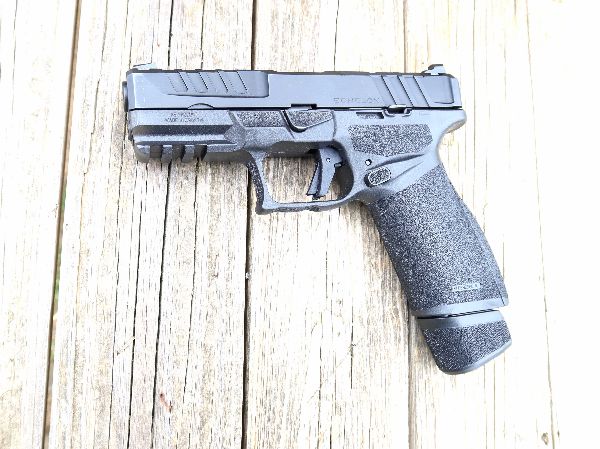
Drawing from an inside-the-waistband holster is one of those foundational skills that separates the casual carrier from the serious student of self-defense. The draw stroke itself is deceptively simple—thumb sweeping the cover garment, fingers finding the grip, a clean upward pull that clears the holster before the muzzle sweeps the target—but every micro-movement matters when fractions of a second count. What makes this particular technique worth revisiting is how it forces the shooter to confront the realities of concealment: fabric drag, body positioning, and the constant tension between speed and safety. In an era when more Americans are carrying daily than at any point since the shall-issue revolution, refining this single motion isn’t just marksmanship; it’s an acknowledgment that the right to bear arms carries with it a duty to be competent.
For the broader Second Amendment community, the inside-the-waistband draw represents something larger than a range drill. It embodies the practical exercise of a constitutional right that was long treated as theoretical by courts and culture alike. When states moved from discretionary “may-issue” regimes to shall-issue permitting, millions of citizens gained not just the legal ability but the everyday responsibility to protect themselves and their families. That responsibility shows up in the details—how a holster sits against the body, how a cover garment is chosen, how often the draw is practiced under stress. The technique becomes a quiet rebuttal to the old argument that an armed citizen is somehow more dangerous than an unarmed one; competence, not mere possession, is what turns a right into a reliable safeguard.
The implications extend beyond the individual range session. As more states adopt constitutional carry and training requirements remain minimal or nonexistent in many jurisdictions, the burden of skill development falls squarely on the carrier. That reality strengthens the case for a culture of voluntary, rigorous preparation rather than top-down mandates that could be used to restrict access. It also underscores why the industry continues to innovate with holster materials, cant angles, and appendix options that make the draw faster and safer. In the end, every clean presentation from concealment is a small affirmation that the Second Amendment is not an abstraction but a living practice—one that rewards those willing to master its mechanics.


