

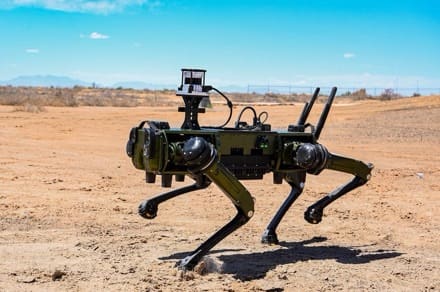
The Department of War’s new OTA consortium is quietly shopping for complete, field-ready unmanned ground vehicles that can operate in both combat zones and domestic training ranges, and the 2A community should pay attention. While the solicitation is framed around “tactical and non-tactical environments,” the language is broad enough to include everything from squad-level resupply bots to armed perimeter sentries—exactly the kind of dual-use autonomy that blurs the line between overseas contingency and homeland security. If the government can field a 300-pound tracked robot that autonomously patrols a forward operating base, the same chassis can just as easily be repurposed for port security, border surveillance, or even crowd-control missions inside the continental United States.
For gun owners, the real story isn’t the hardware; it’s the precedent. Every time a federal agency buys a robotic system under an “other transactional authority,” it sidesteps the normal acquisition rules that usually trigger public comment and congressional oversight. That means fewer opportunities for citizens to ask whether an armed UGV complies with posse comitatus, the Fourth Amendment, or state laws governing armed robots. The 2A community has spent the last decade fighting magazine bans and pistol braces; the next decade may be spent litigating whether an autonomous machine can be considered an “arm” at all, or whether its software and sensors constitute a “search.”
The upside is that the same rapid-prototyping pipeline now being used for military UGVs will inevitably trickle down to civilian robotics companies. Law-abiding Americans who want to field their own autonomous sentries on private property may soon have access to rugged, affordable platforms that were originally developed under DoW contracts. The challenge will be ensuring that any future regulatory reaction—registration requirements, geofencing mandates, kill-switch rules—doesn’t become a back-door gun-control measure aimed at both the robots and the people who own them.


