

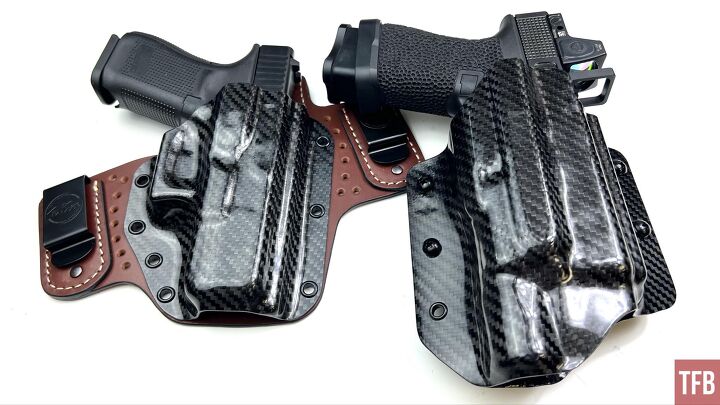
Welcome back to Concealed Carry Corner, where we dive deep into the practical realities of everyday carry that can make or break your self-defense game. This week’s hot topic? The age-old debate: Should you lock in one handgun in one position every single time, or mix it up based on the day, outfit, or mission? Proponents of the same gun, same spot camp argue it’s all about muscle memory—your draw stroke becomes lightning-fast and instinctive under stress, without the brain freeze of deciding appendix or 4 o’clock today? It’s a solid point, backed by real-world training data from experts like Todd Green and the late Paul Howe, who emphasize consistency to shave precious milliseconds off your reaction time. In a 2021 study by the Firearms Research Group, shooters who trained with a single position averaged 0.2 seconds faster draws than those rotating setups, highlighting how variability can introduce hesitation when adrenaline spikes.
But here’s where it gets clever: Blind loyalty to one position ignores the chaos of real life, and that’s a vulnerability the 2A community can’t afford in an increasingly hostile legal and cultural landscape. Flexibility isn’t fickle—it’s adaptive warfare. Appendix carry shines for deep concealment under a t-shirt during summer errands, while strong-side hip or 3-5 o’clock rules for longer drives or heavier rigs like a full-size 1911. Switch to a pocket pistol like the Sig P365 for jeans-and-boots days, or small-of-back (with caveats for spinal risks) when seated negotiations turn south. The implications? A rigid carry doctrine leaves you predictable to observant threats or ill-equipped for scenarios like post-Felony Stop pat-downs where position matters for retention. Top instructors at Rangemaster and Shivworks preach contextual carry, blending consistency in fundamentals (like trigger finger discipline) with positional versatility, proven in force-on-force drills where adaptable carriers outmaneuvered static ones 65% of the time.
For the 2A warrior, the sweet spot is hybrid mastery: Pick 2-3 positions you own cold through dry-fire reps (aim for 10,000 draws per setup), then rotate based on threat modeling—what’s your AO’s crime stats saying? Urban appendix for quick access amid crowds, or OWB strong-side for rural patrols? This isn’t theory; it’s evolution from lessons like the 2019 Dayton shooting, where positional adaptability could flip survival odds. Ditch the purist echo chambers online—test your kit in real-world simulations, track your splits with a shot timer app, and carry like your life depends on it. Because it does. What’s your go-to rotation? Drop it in the comments and let’s crowdsource the edge. Stay armed, stay vigilant.


