

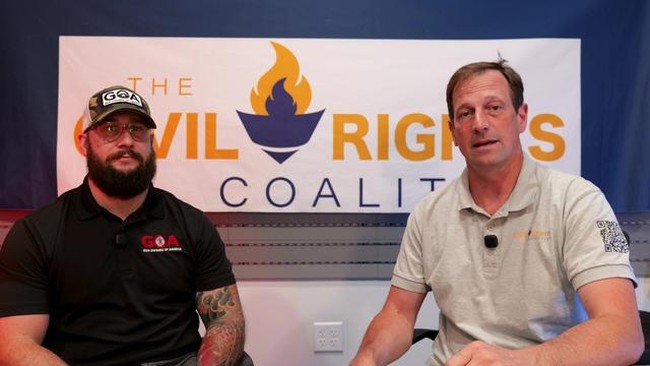
Chris Stone’s appearance on RapidFire Radio lands at a critical inflection point for Massachusetts gun owners, where the state’s sweeping Chapter 135 restrictions are colliding with a rare ballot-box opening created by the Civil Rights Coalition’s petition drive. Stone frames the fight not as a narrow policy debate but as a civil-rights reclamation project, arguing that GOA’s national litigation and legislative muscle can be grafted onto local grassroots energy to reverse decades of incremental disarmament. The timing is deliberate: November 3 offers voters a direct lever to push back against permitting schemes, magazine bans, and red-flag expansions that have metastasized under the guise of “public safety,” and Stone makes clear that GOA intends to treat any victory as a template for other blue states rather than an isolated Massachusetts win.
What makes the conversation especially sharp is Stone’s insistence that rights restoration is not a defensive crouch but an affirmative project—pushing constitutional-carry reciprocity, due-process reforms, and the outright repeal of discretionary licensing. By linking Massachusetts’ struggle to GOA’s broader docket in states like New York and California, he signals that the organization sees Chapter 135 not as an endpoint but as a stress test for whether Second Amendment advocates can convert defensive litigation into offensive ballot and legislative gains. For the 2A community, the takeaway is that single-state losses no longer need to be permanent; coordinated national resources plus disciplined local turnout can flip the script, provided activists treat November 3 as the start of a sustained campaign rather than a one-off referendum.


