

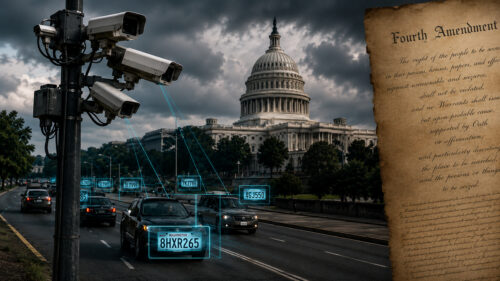
Rep. Tim Burchett’s new bill is more than a privacy measure—it’s a direct shot across the bow of the surveillance-industrial complex that has quietly turned every license-plate reader into a potential gun-registry entry. Flock Safety’s network of AI-driven cameras already logs millions of plates daily, and the company’s own marketing materials brag about “real-time alerts” that can flag a vehicle the moment it enters a school zone or passes a government building. For gun owners who lawfully transport firearms across state lines, that means a digital breadcrumb trail that could be subpoenaed, sold, or simply handed to ATF agents looking for “red-flag” patterns. Burchett’s legislation slams the door on federal agencies buying or tapping into these feeds, and it withholds grant money from states and cities that refuse to unplug—an approach that treats surveillance creep the same way the Second Amendment treats incremental infringements: stop it at the source.
The timing couldn’t be more pointed. With the Biden-era ATF pushing “zero-trust” pistol-brace and frame-receiver rules, any database that correlates a vehicle with a gun range, a gun store, or a border crossing becomes an instant force-multiplier for enforcement. Gun owners have watched banks flag lawful firearm purchases under Operation Choke Point 2.0; now the same data can be triangulated with overhead imagery and geofenced alerts. By cutting off federal funding and access, Burchett’s bill doesn’t merely protect commuters—it starves the administrative state of the connective tissue it needs to turn otherwise legal behavior into retroactive violations.
Critics will call the measure “anti-police,” but the real question is whether local departments should outsource Fourth-Amendment compliance to a private vendor whose algorithm treats every plate as a potential lead. For the 2A community, the stakes are concrete: once your truck is logged leaving a gun show or entering a state that just banned standard-capacity magazines, the data point exists forever. Burchett’s bill keeps that ledger from being compiled with your tax dollars, and it reminds legislators that the right to keep and bear arms includes the right to move without being logged like inventory.


