

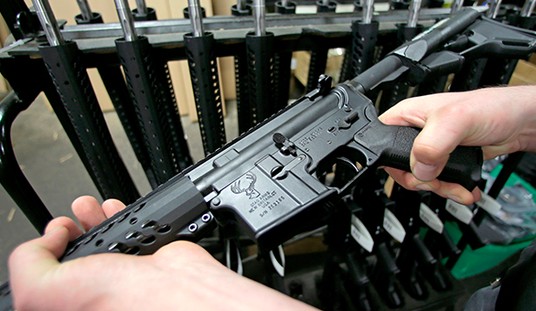
The Supreme Court’s decision to hear a direct challenge to assault-weapon bans is the most significant Second Amendment development since Bruen, and it arrives at a moment when lower courts have been openly defying that precedent. For years, judges in Illinois, California, and elsewhere have upheld magazine and feature bans by inventing “sensitive places” or “sensitive weapons” doctrines that Bruen never endorsed; now the justices have signaled they are ready to test whether those work-arounds survive constitutional scrutiny. The stakes are straightforward: if the Court applies the same text-and-history test it used in Bruen, the common-use doctrine that already protects AR-15s and standard-capacity magazines becomes nearly impossible to evade, because millions of those firearms are in lawful civilian hands and have never been regulated in the way handguns were before Heller.
What makes this grant especially noteworthy is the composition of the circuit split the Court has chosen to resolve. The Seventh Circuit’s upholding of Illinois’ ban stands in open contrast to decisions from the Ninth and Fourth Circuits that struck down similar restrictions, giving the justices a clean vehicle to clarify that “in common use” is not a loophole states can close by legislative labeling. For the 2A community this means the long-running state-by-state attrition strategy—passing bans, daring courts to uphold them, and counting on delay—may finally hit a constitutional wall rather than another procedural punt. Expect amicus participation from every major rights group and a flood of historical evidence showing that the very features now labeled “assault” were commonplace on civilian rifles throughout the 19th and early 20th centuries.
If the Court ultimately strikes these bans, the practical effect will be immediate nationwide relief for owners currently facing confiscation orders or registration schemes, and it will reset the political battlefield by removing the most potent scare tactic from the gun-control playbook. Conversely, a narrow or fractured opinion could invite a new round of litigation over “sensitive places” redefined as entire cities or “sensitive features” redefined as any semi-automatic action. Either way, the term that began with Bruen’s promise of a return to constitutional text now appears ready to finish the job on the hardware restrictions that have defined the post-Heller era.


