

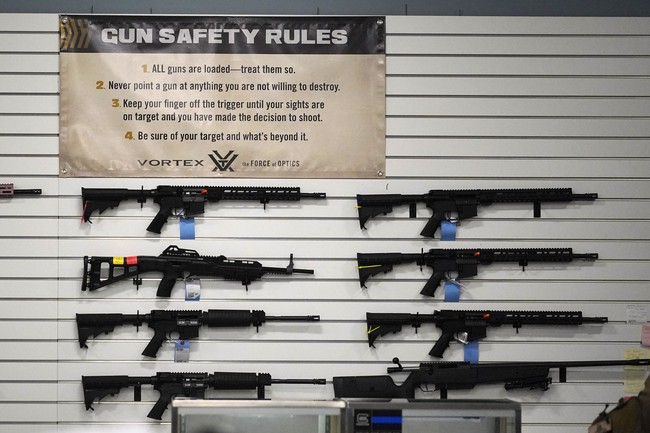
The Seventh Circuit’s decision to uphold Illinois’ sweeping gun and magazine ban lands like a gut punch to law-abiding owners, but it also exposes the raw mechanics of how courts can sidestep Bruen’s text-and-history test when the political stakes feel too high. Rather than demanding the state produce a historical analogue for disarming millions of citizens over common semiautomatic features or standard-capacity magazines, the panel essentially treated the 2023 statute as self-justifying once public safety was invoked—an approach that risks turning Bruen into a polite suggestion instead of binding precedent. For the 2A community this isn’t merely another loss on the scoreboard; it’s a live demonstration that some circuits will continue to insulate restrictions by narrowing what counts as “relevantly similar” founding-era evidence until the right itself is defined out of existence.
What makes the ruling especially combustible is its timing against the backdrop of accelerating shall-issue permitting reforms and the rapid proliferation of constitutional-carry states. Illinois now stands as an island where millions of residents are told that magazines holding more than ten rounds—ubiquitous since before the Civil War—are suddenly too dangerous for civilian hands, while neighboring jurisdictions treat the same hardware as ordinary. That geographic inconsistency fuels both migration of gun owners and a growing sense that rights can be dialed up or down by ZIP code, a reality that invites further Supreme Court intervention or, at minimum, renewed scrutiny of how lower courts apply the Bruen framework. The decision also hands anti-gun litigators a new template: frame any popular semiautomatic platform as an “assault weapon” and argue that the absence of identical historical bans is irrelevant if modern “social science” is deemed compelling enough.
For activists and organizations tracking dockets nationwide, the Seventh Circuit opinion underscores the necessity of building a thicker historical record and pushing parallel challenges that force en banc or Supreme Court review before similar statutes metastasize to other blue states. It also spotlights the value of state-level sanctuary policies and interstate reciprocity efforts that blunt the practical effect of one circuit’s outlier ruling. In short, while the immediate outcome restricts Illinois residents, the longer-term implication is a sharper contest over whether Bruen will be enforced uniformly or allowed to erode through creative judicial gloss—an issue the 2A community is now positioned to litigate with greater clarity and urgency.


