

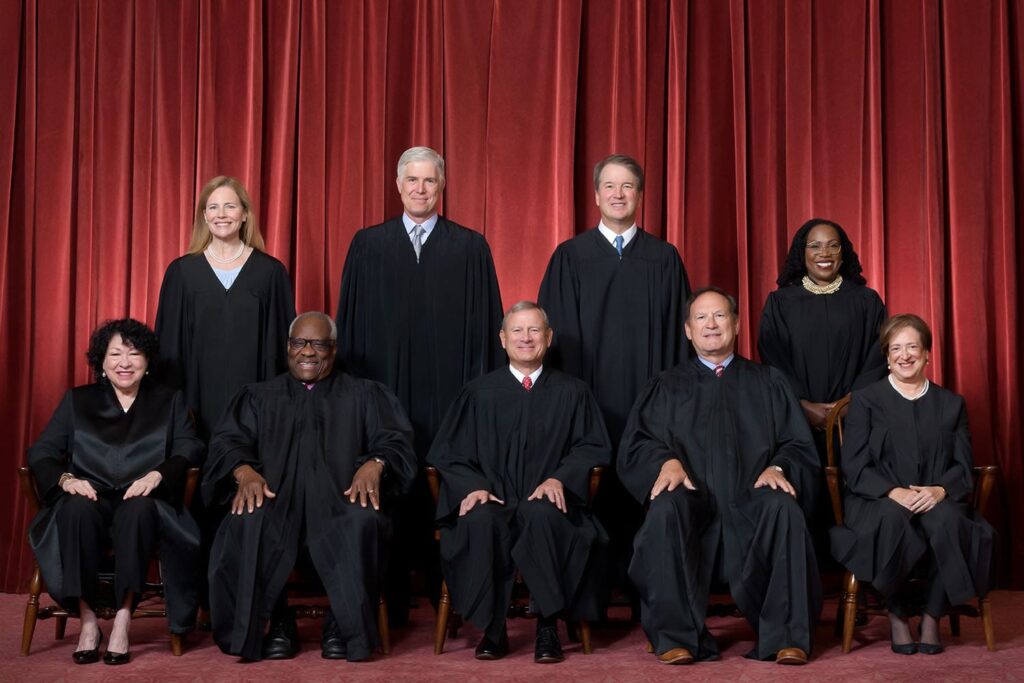
The Supreme Court’s decision to take up the Illinois and Connecticut semi-auto bans is more than a docket entry—it’s the first time the justices will directly confront whether a rifle that millions of law-abiding Americans already own can be legislated out of existence. By granting cert in these paired cases, the Court signals it is ready to finish the work begun in Heller and Bruen: applying the text, history, and tradition test to the most politically charged firearms of our era. For the 2A community, that means the same analytical framework that struck down New York’s carry-permit regime will now be aimed squarely at the claim that an AR-15 is somehow “unusual” simply because it is effective.
What makes the move especially significant is the timing and the breadth of the question presented. Lower courts have spent the last decade inventing interest-balancing tests and “common-use” loopholes to uphold bans; Bruen was supposed to end that game, yet several circuits still treat the AR platform as categorically outside the Second Amendment. By consolidating Illinois and Connecticut, the Court can resolve the split in one stroke and, more importantly, clarify that the relevant historical inquiry is 1791—not 1994 or 2013. That clarification would immediately imperil copycat restrictions in California, New York, New Jersey, and Massachusetts, while giving lower courts a clear roadmap for future challenges to magazine-capacity limits and “assault-weapon” features.
For gun owners, the practical takeaway is simple: the legal battlefield has shifted from legislative chambers to the Marble Palace, and the outcome will determine whether the most popular rifle in America remains legal from sea to shining sea. The 2A community should treat this grant of cert as both validation and warning—validation that years of litigation funding and grassroots pressure are bearing fruit, and warning that victory will require disciplined, text-and-history arguments rather than policy talking points. If the Court stays true to Bruen, the era of state-level semi-auto prohibition could be drawing to a close; if it blinks, the patchwork of bans will harden into a new normal. Either way, the next twelve months will shape the practical reach of the Second Amendment for a generation.


