

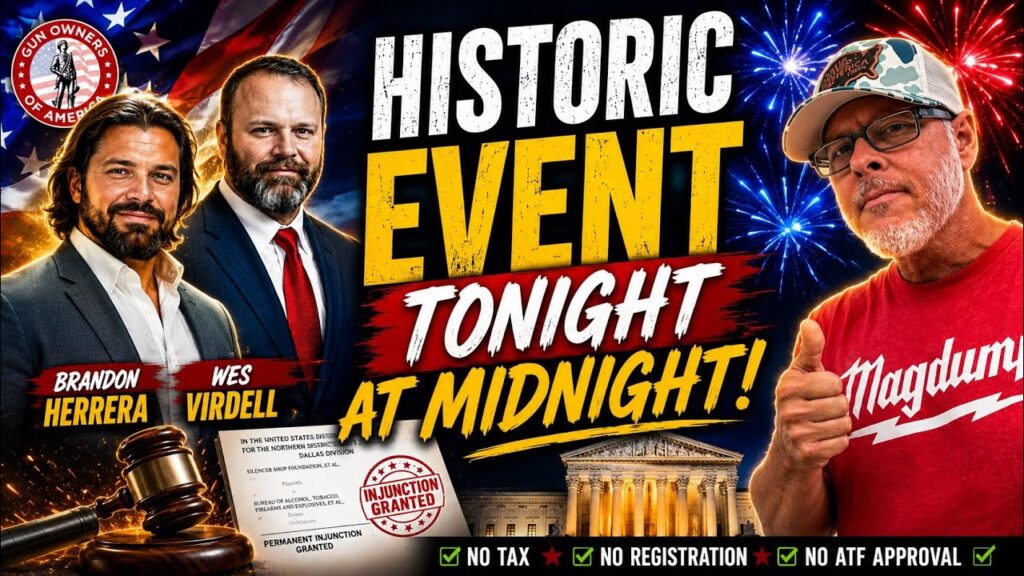
The NFA injunction that appears poised to take effect at midnight is more than a procedural hiccup—it’s a potential constitutional earthquake. For decades the National Firearms Act has functioned as a de facto tax on the exercise of a fundamental right, requiring law-abiding citizens to beg permission, pay a $200 levy, and wait months for the privilege of owning a suppressor. If the injunction truly suspends that regime overnight, Brandon Herrera and Wes Virdell’s planned purchases aren’t just cheeky political theater; they’re a live demonstration that the Second Amendment can operate without a permission slip from the administrative state. The optics are powerful: two recognizable faces in the gun-rights movement walking into a gun shop, handing over cash, and walking out with a product that until this moment required the same paperwork as a machine gun.
What makes the moment especially potent is the timing. The injunction lands against a backdrop of record suppressor sales, plummeting wait times, and a growing body of peer-reviewed evidence that suppressors reduce hearing damage without meaningfully aiding criminal activity. By moving immediately, Herrera and Virdell force the question into the open: if the Second Amendment really protects “arms in common use” for lawful purposes, why should a muffler for a rifle be treated like a howitzer? Their stunt also spotlights the practical absurdity of the current regime—law-abiding citizens have been paying a tax originally aimed at Prohibition-era gangsters for items that modern European hunters treat like eye protection. If the injunction survives even a few weeks, it could accelerate a broader reckoning over the NFA’s other categories, from short-barreled rifles to AOWs.
For the wider 2A community, the episode is both an opportunity and a warning. An injunction is not a permanent repeal; it can be stayed, overturned, or narrowed on appeal. That means the next several days will be a race between citizens exercising newfound freedom and federal agencies scrambling to reassert control. If the courts ultimately uphold the injunction, the episode will still have value as a stress test of the administrative state’s ability to regulate an enumerated right through taxation and paperwork. If the injunction collapses, the episode becomes a cautionary tale about celebrating victories that haven’t been cemented by legislation or Supreme Court precedent. Either way, tonight’s suppressor run is a vivid reminder that constitutional rights are not self-executing—they advance when citizens are willing to test the limits of government power in real time.


