

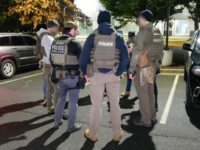
Boston Democrats are up in arms over ICE’s modest request for a few parking spots, and the optics couldn’t be more revealing. While the agency simply needs space to stage vehicles for lawful enforcement operations, local officials are framing the ask as an existential threat to sanctuary-city virtue-signaling. The same politicians who reflexively restrict lawful gun owners’ access to ranges, storage, and transport corridors suddenly discover a passion for “community space” when federal immigration agents need a place to park. It’s a textbook example of policy priorities: inconvenience for citizens exercising constitutional rights is acceptable, but any accommodation for interior enforcement is treated like an invasion.
For the 2A community the episode is a reminder that institutional hostility rarely stays confined to one issue. Jurisdictions willing to starve federal law-enforcement of basic logistics are often the same ones that ration public range time, impose punitive fees on carry-permit classes, and champion “sensitive area” maps that turn entire cities into no-carry zones. When parking becomes a political battleground, it signals deeper friction between local governments and the constitutional order—friction that law-abiding gun owners feel every time they try to exercise their rights inside city limits. The takeaway is straightforward: if officials treat ICE’s tow trucks as a bridge too far, they’re unlikely to treat your safe, locked firearm any more kindly.
The larger implication is that sanctuary policies are not neutral; they recalibrate the relationship between citizens and the federal government. By denying routine operational support, cities effectively nullify enforcement nationwide, creating pockets where immigration law—and, by extension, other federal statutes—apply unevenly. Second Amendment supporters who have watched states and localities selectively enforce or nullify gun laws recognize the precedent. If parking spaces can be held hostage to political grievance, so can background-check reciprocity, magazine-capacity rules, or future national reciprocity legislation. The fight over asphalt in Boston is therefore a skirmish in a broader contest over whether constitutional rights and federal law will be uniformly respected or held subject to local veto.


