

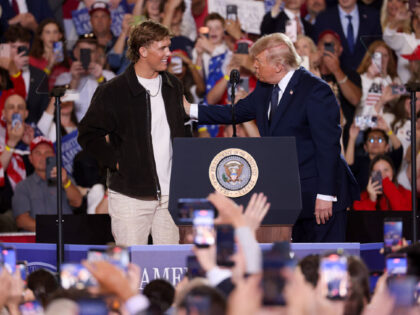
Boomer Esiason’s takedown of Abdul Carter wasn’t just sports-radio theater—it was a pointed reminder that the culture war over guns and freedom doesn’t stop at the stadium gates. When the second-year linebacker publicly scolded teammate Jaxson Dart for introducing President Trump at a recent event, he stepped squarely into a debate the 2A community has been having for years: whether athletes should be allowed to associate with pro-Second Amendment figures without professional repercussions. Esiason’s swift rebuke framed Carter’s comments as tone-deaf virtue signaling, and in doing so he highlighted how quickly the league’s progressive monoculture polices any deviation from the approved script—even when that deviation is nothing more than standing next to a president who has repeatedly defended the right to keep and bear arms.
For gun owners watching from the cheap seats, the episode underscores a larger pattern: high-profile athletes who lean right or even neutral on firearms issues routinely face internal pressure to stay silent, while those who parrot anti-gun talking points are celebrated as “courageous.” Dart’s willingness to appear with Trump sent an implicit signal that at least one Giants quarterback isn’t interested in the performative anti-2A posturing that has become fashionable in certain locker rooms. Carter’s reaction, by contrast, revealed how reflexively some younger players treat any association with pro-Second Amendment leadership as disqualifying. The result is a chilling effect that extends beyond football—young fans absorb the message that supporting the right to self-defense is somehow unsportsmanlike.
The broader implication for the firearms community is that cultural institutions like the NFL remain contested ground. Every time a Boomer Esiason pushes back against the narrative that gun owners or their political allies are beyond the pale, it normalizes the idea that lawful carry and constitutional principles are compatible with mainstream American life. Conversely, when players like Carter attempt to police their teammates’ political associations, they reinforce the perception that the league’s dominant culture is still hostile to the very voters and consumers who make up a significant slice of its audience. In that sense, a seemingly minor quarterback-coach dust-up on WFAN is really a microcosm of the larger fight over whether the Second Amendment will be treated as a mainstream value or a fringe liability.


