

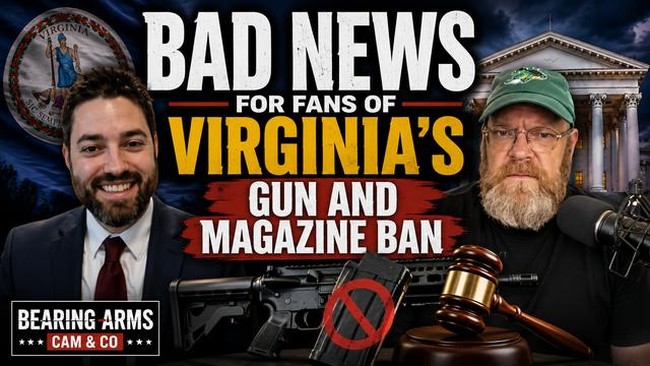
The Supreme Court’s decision to hear the Virginia magazine and “assault weapon” cases is already reshaping the battlefield, and Joseph Greenlee’s appearance on Cam & Co. makes clear why gun owners should feel cautiously optimistic. Greenlee, the NRA-ILA’s top litigator, walked listeners through the strategic pivot the Commonwealth’s new Democratic majority is attempting: instead of defending the bans on the merits, state attorneys are now leaning on standing arguments and ripeness doctrines to keep the merits from ever being reached. That maneuver tells you everything about the weakness of their position; if the laws were constitutional, they would be eager to litigate them. Greenlee’s preview of the amicus briefs he is drafting underscores the larger point—Second Amendment jurisprudence is no longer a defensive crouch; it is an offensive campaign to force lower courts to apply Bruen’s text-and-history test without the old interest-balancing escape hatches.
What makes this moment different is the convergence of timing and personnel. With Justice Barrett solidifying the originalist majority and several circuits still dragging their feet on Bruen, the Virginia litigation is shaping up as the first real stress test of whether the Court will tolerate continued judicial nullification. Greenlee’s brief-writing strategy—pairing historical English and early American sources with modern data on magazine capacity and feature bans—aims to close the analytical gaps that judges in the Ninth and Second Circuits have tried to exploit. For the 2A community, the takeaway is straightforward: every round of state-level prohibition that reaches the Court is another opportunity to lock in nationwide precedent rather than piecemeal victories. The bad news for ban advocates is that the escape routes they relied on for a decade are narrowing fast; the good news for Virginia gun owners is that the same narrowing may soon make their state’s restrictions legally irrelevant.


