

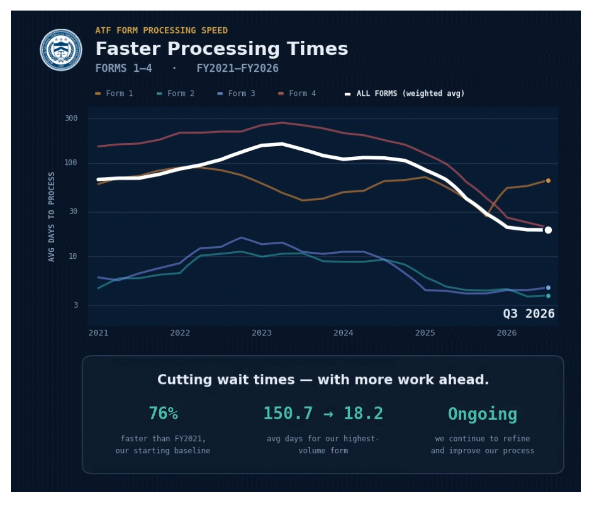
The ATF’s sudden drop in NFA processing times is more than a bureaucratic footnote—it’s a direct result of the agency being forced to confront the very demand it once tried to throttle. With applications hitting record highs, the bureau has quietly shifted resources and streamlined workflows, cutting wait times from the 12-month purgatory many owners endured just a few years ago. That shift didn’t happen because the ATF suddenly embraced the Second Amendment; it happened because the volume of law-abiding citizens willing to pay the tax, submit fingerprints, and navigate the paperwork finally overwhelmed the old system. In other words, the market spoke louder than any lawsuit.
For the 2A community, shorter waits translate into real-world gains: faster access to suppressors that protect hearing, SBRs that improve home-defense handling, and the peace of mind that comes from exercising a constitutional right without an arbitrary twelve-month delay. Yet the surge also signals something deeper—Americans are no longer content to let regulatory friction serve as de-facto prohibition. Each new Form 1 or Form 4 is a quiet referendum against the notion that the Second Amendment stops at the edge of a shall-not-be-infringed clause. The ATF can tout improved efficiency all it wants, but the underlying message is that an armed populace is voting with its wallet and its paperwork, and the agency is finally having to keep up.


