

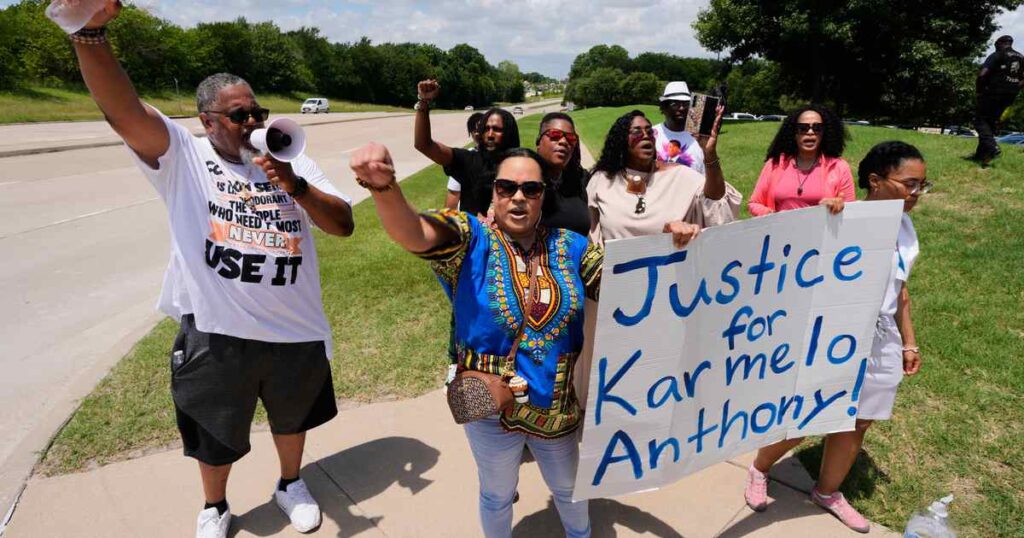
Karmelo Anthony’s defense team is now arguing that the original trial was tainted by procedural errors and evidentiary oversights, and the newly surfaced details—particularly the timeline of the confrontation and the absence of any weapon on the deceased—have reignited debate over how quickly a self-defense claim can be dismissed in Texas. The facts as they are emerging suggest the encounter began with a verbal dispute that escalated when Anthony produced a legally carried pistol; the prosecution’s narrative hinges on the claim that Anthony “created the danger,” yet the defense counters that the deceased’s aggressive advance left Anthony with no safe avenue of retreat. For the 2A community, the case is a live-fire demonstration of why “duty-to-retreat” jurisdictions remain hostile to armed citizens: even when a shooter is ultimately justified, the legal aftermath can stretch for years and cost tens of thousands in legal fees, underscoring the importance of constitutional-carry states and robust self-defense statutes that place the burden of proof on the state rather than the defender.
Beyond the courtroom theatrics, the Anthony matter spotlights a broader cultural shift in how media and prosecutors frame defensive gun uses involving minority shooters; the same outlets that reflexively label any defensive shooting by a law-abiding citizen as “gun violence” are now hedging their language, revealing an ideological inconsistency that gun owners have long predicted. If the appellate court grants a new trial, the precedent could either fortify Texas’ strong castle doctrine or, conversely, invite a wave of second-guessing whenever a legally carried firearm is used to stop an imminent threat. Either outcome will be dissected in every firearms-training course from El Paso to Texarkana, because the lesson is simple: the Second Amendment is only as secure as the legal framework that respects it, and the Anthony appeal is shaping up to be the next stress-test of that framework.


