

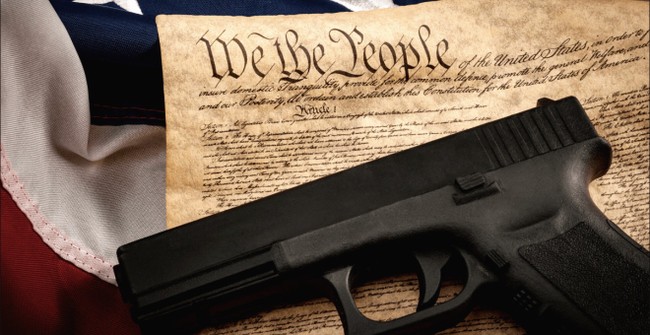
In a ruling that underscores the growing judicial momentum behind the Second Amendment, an Arkansas court has struck down restrictions that effectively disarmed law-abiding citizens, reaffirming that the right to bear arms is not a privilege granted by the state but a fundamental liberty rooted in the Constitution. This decision arrives at a critical juncture, as states across the country continue to test the boundaries of post-Bruen jurisprudence—where historical tradition, not modern policy preferences, serves as the benchmark for gun regulations. By rejecting the notion that government can impose burdensome hurdles on the exercise of a core constitutional right, the court has delivered a clear message: shall-issue permitting schemes and discretionary “may-issue” holdovers are increasingly on shaky legal ground.
For the 2A community, this victory is more than a single-state win—it signals that courts are finally applying the Supreme Court’s directive to evaluate gun laws against the nation’s historical tradition of firearm regulation rather than contemporary interest-balancing tests. The implications stretch far beyond Arkansas, offering a blueprint for challenges in states still clinging to restrictive carry regimes or magazine bans. As more federal and state courts confront the post-Bruen landscape, decisions like this one erode the remaining pockets of resistance, making it harder for anti-gun officials to justify policies that treat the right to self-defense as an afterthought. The ruling also energizes grassroots efforts, reminding activists and attorneys alike that persistent litigation, grounded in text, history, and tradition, continues to chip away at decades of incremental disarmament.
Looking ahead, this Arkansas decision could accelerate the normalization of constitutional carry and force recalcitrant jurisdictions to confront the reality that the Second Amendment is not a second-class right. It also highlights the importance of electing judges and attorneys general who respect the plain meaning of the Constitution rather than inventing new balancing tests to uphold favored policies. For gun owners, the takeaway is straightforward: every favorable ruling builds precedent, every precedent narrows the field for future restrictions, and the cumulative effect is a legal environment where the right to keep and bear arms is treated with the same solicitude as other enumerated freedoms.


