

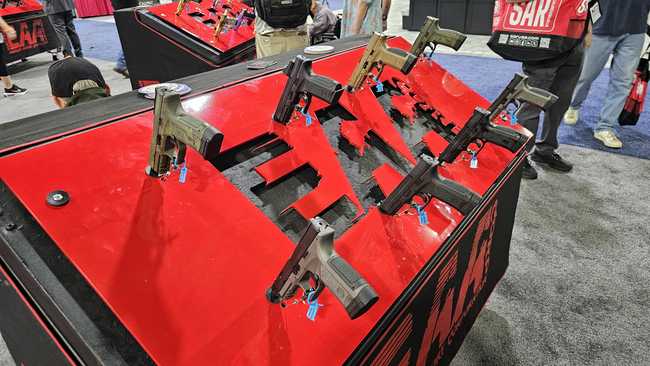
The recent Second Amendment gathering that drew national attention wasn’t just about magazine limits or carry reciprocity—it became an unexpected flashpoint for how the gun-rights movement handles fringe elements that traffic in antisemitic conspiracy theories. Organizers who had hoped to keep the program laser-focused on legislation found themselves fielding questions about attendees who openly blamed “globalists” for gun-control efforts, a well-worn euphemism that historically points to Jewish communities. Rather than dismissing the episode as an isolated PR headache, serious pro-2A voices are treating it as a stress test: can the movement police its own ranks without fracturing the coalition that has spent three decades building single-issue credibility on the Hill?
What makes the moment especially instructive is the contrast between institutional players and grassroots energy. Groups like the NRA and SAF were quick to reaffirm that their lobbying priorities remain constitutional carry and protecting the hobby and trade, yet several mid-level PAC operatives privately conceded that donor phone calls spiked once screenshots from the event circulated. Meanwhile, the fastest-growing segment of new gun owners—urban, minority, and largely indifferent to paleo-conservative culture war debates—watched the spectacle on social media and asked whether the Second Amendment tent is big enough for them. Data from the National Shooting Sports Foundation shows that first-time Black and Hispanic female buyers now account for roughly a third of handgun sales; alienating that cohort over unrelated identity politics would be an act of unilateral disarmament in the culture war over rights.
The deeper implication is strategic, not moral. Antisemitic ideation tends to migrate into policy spaces by reframing every legislative loss as the work of shadowy cabals rather than the predictable result of swing-district math and suburban voter priorities. When that narrative takes hold, it crowds out the granular, boring work of coalition-building with law enforcement unions, veterans’ groups, and small-business owners who simply want range access and product liability reform. The gun-rights community’s comparative advantage has always been disciplined single-issue focus; indulging conspiracy thinking risks trading that advantage for the same circular firing squad that has crippled other grassroots movements. Events like this one are therefore less about excising “bad apples” than about stress-testing whether the 2A coalition still knows how to keep the main thing the main thing.


